


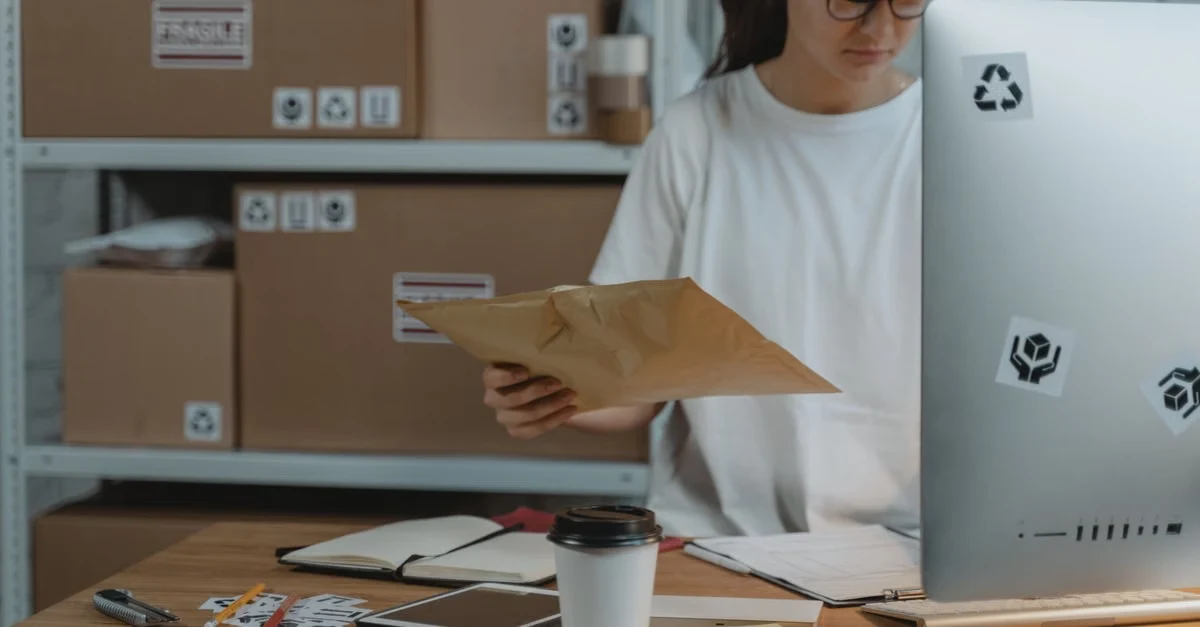
Knowing the storage requirements for compostable and traditional disposables can save you from wasted stock and frustrated customers.
Traditional plastic is forgiving. You can leave a case in a hot corner of the warehouse for years, and it holds up fine. Compostable products ask for a bit more thought.
The changes are small and easy to manage once you know what to watch for. This guide puts compostable and conventional disposables side by side, so you can see what changes in storage and what stays exactly the same.
What changes in storage, and what stays the same
Before the details, here is the short version of what you are dealing with.
What changes with compostable products:
- They have a real shelf life, usually around 12 months, while plastic lasts for years.
- Heat and humidity affect their quality and performance.
- Stock rotation moves from “nice to have” to “important.”
- Keeping them out of direct light helps them last.
What stays the same for both:
- Pallets go off the floor and away from the walls.
- Cartons stay sealed until use.
- Basic dust and pest control still applies.
- Dry, indoor storage is the baseline.
One point is worth clearing up right away. Heat and humidity affect how a compostable product looks and performs on the shelf. They do not make it start composting in your warehouse.
Compostable packaging only breaks down under specific composting conditions, where sustained heat, moisture, and microbes work together. Your storage room does not have that mix.
The storage comparison at a glance
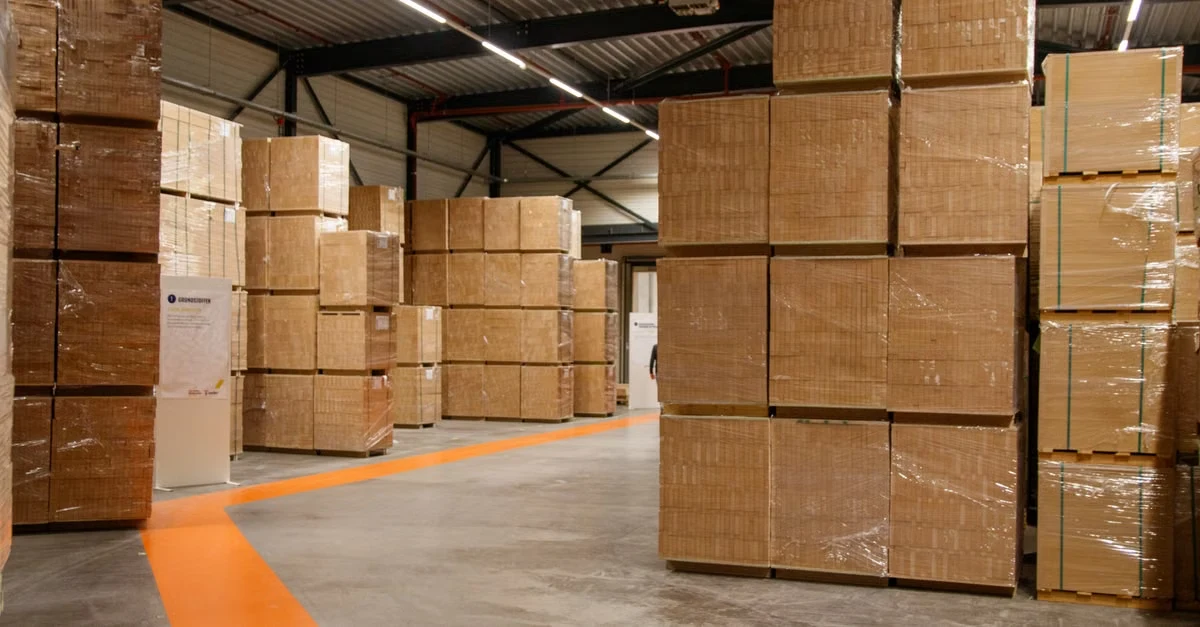
Here is how compostable and conventional options compare in storage. For how they compare in transit, see compostable vs. plastic packaging shipping.
These figures are general ranges from manufacturer guidance and material data. No official standard sets a shelf life for these products, so your supplier’s spec sheet is always the final word.
How temperature affects storage
Compostable straws can soften and lose shape in high heat, so temperature is the main thing to watch.
Here is how each material in NantBioRenewables’ range holds up:
- Ocean Calcium Sand (aragonite): The most heat-stable of the group. This mineral base holds its form well, and BioCal inherits that stability.
- BioCal: Handle with normal care. Since it blends aragonite with PLA and other polymers, keep it cool and out of direct sun, the same as the rest of the compostable range.
- Cellulose diacetate: Comfortable at typical warehouse temperatures. It holds up fine as long as it stays out of direct heat sources.
- PLA: Keep it below 95°F (35°C). This is where the ideal-temperature guidance matters most, since PLA is more heat-sensitive than the mineral-based materials.
- Polypropylene: Barely reacts to heat at all. As the conventional option in the range, it holds its shape across a wide span of warehouse temperatures.
- Paper: Long stretches of warmth leave it brittle and yellowed over time.
Across the compostable range, store products below 95°F (35°C), in a cool, dry place, away from direct sunlight and heat sources like ovens, radiators, or industrial equipment.
A trailer parked in the summer sun can climb well past 100°F inside, enough to soften and warp packaging before you open the box, so transit and dock time are the riskiest windows.
How humidity affects storage
If temperature is the main worry for compostable straws, moisture is the other one.
Avoid high-humidity environments. The EPA recommends keeping indoor humidity below 60%, and ideally between 30 and 50%, to prevent mold. Once the humidity sits above 70% for a few days, mold becomes likely.
Paper is the most moisture-sensitive material on this list. It pulls water from the air like a sponge, then warps, softens, and can grow mold.
Compostable straws handle humidity better than paper, though very damp storage over many months can still affect firmness and performance.
Conventional polypropylene ignores humidity almost entirely, since it does not absorb moisture from the air.
Keep products in their original packaging until ready for use. It protects them from dust, moisture, and temperature swings all at once.
Stacking and handling differences
How high you can stack depends on the material and the temperature around it.
For compostable straws, plates, cutlery, and other packaging, limit your stack height in warm storage. Softening plus the weight of boxes above can deform the cases underneath, so keep the stock cool and avoid tall stacks.
Conventional polypropylene is the toughest and most forgiving to stack and move. Paper stacks fine when dry and collapses when damp.
A few habits help across the board:
- Shrink-wrap your pallets.
- Leave a gap between them for airflow.
- Keep the oldest stock within easy reach.
Which materials attract pests
Some materials draw more interest from insects and rodents than others.
- Compostable packaging: Low-risk when dry. There is little on the surface to attract pests on its own.
- Damp compostable stock: A different story. Moisture and mold can invite pests in, so keeping storage dry does double duty here.
- Paper and cardboard: The bigger draw. Cellulose, plus the starch-based glues and coatings, can attract stored-product insects like silverfish and beetles, especially above 65% humidity.
- Conventional polypropylene: Close to inert. Pests have little reason to bother with it.
Fiber-based products can pick up strong odors, so store compostable packaging stock away from cleaning chemicals and anything with a heavy smell.
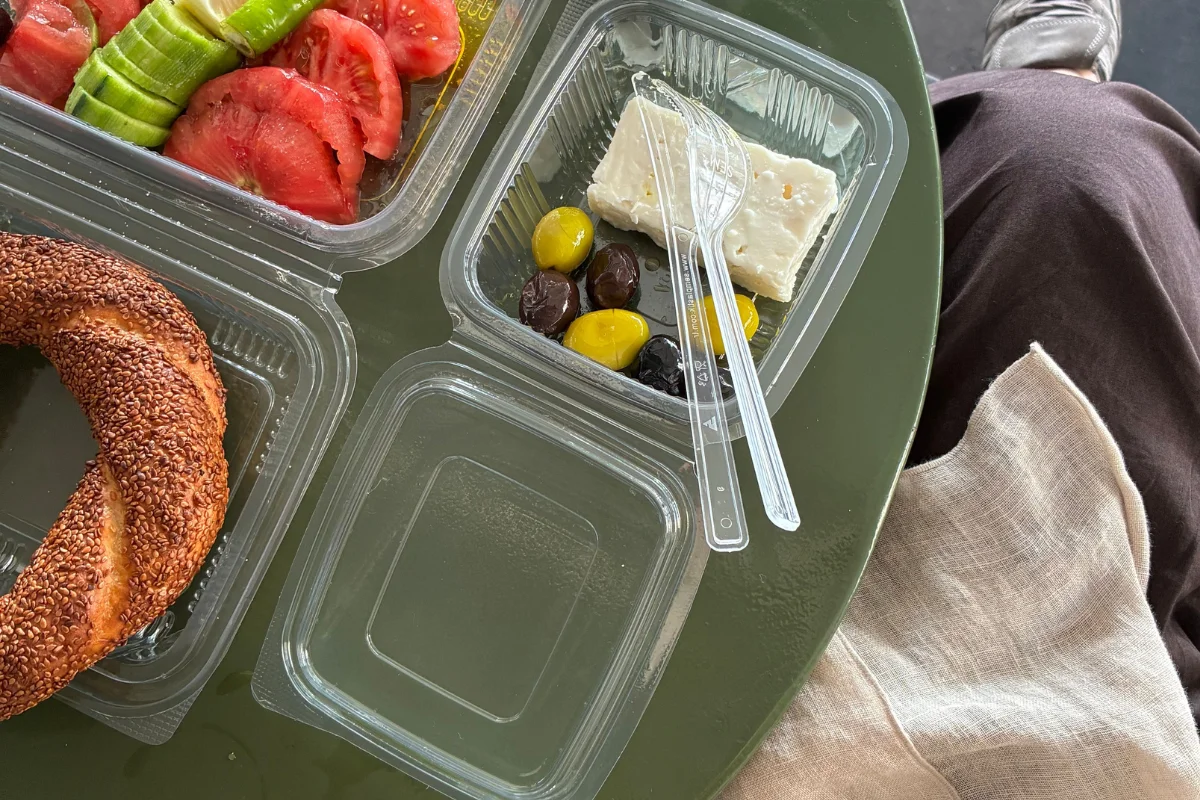
Do compostables take up more warehouse space?
It depends on the shape of the product. Materials do not have much to do with space.
Molded and nested items can take up less room than bulky clamshells. The trade-off is that compostable products need a little breathing room.
You leave airflow gaps between pallets, keep them off hot exterior walls, and set them back from dock doors. That can lower how densely you pack the space.
For most distributors, it balances out. Compostable products rarely need more room dramatically.
Where you place them matters more than how much volume they take.
The real cost of storing compostables
Compostable packaging already costs 10 to 40% more upfront than conventional packaging, so protecting that investment in storage matters.
The good news is that you usually do not need to build a cold room. A warehouse that already stays cool, dry, and out of direct sunlight meets the bar.
The costs that do show up are modest: basic monitoring equipment, plus a little extra labor for tighter rotation. The higher cost is the risk of writing off stock that expired before you sold it.
That sort of thing happens when you import compostable packaging from China, Vietnam, or other foreign manufacturers.
If a compostable straw has a 12-month shelf life and it spends 12 weeks traveling from an overseas factory to your warehouse, it has already used up roughly 23% of its shelf life before you have touched a single case.
That leaves less time to sell it and a higher chance of write-offs.
This is where domestic manufacturing changes the math. NantBioRenewables manufactures daily, 24/7, in the United States.
So standard stock ships in 2 to 4 weeks, or 4 to 6 weeks with custom artwork, compared with 8 to 12 weeks from overseas competitors, sometimes up to 15.
That means you do not need to stock huge volumes against a one-year shelf life.
NantBioRenewables can manufacture what you need, when you need it, which removes the over-ordering risk that overseas sourcing creates.
Want to see how the numbers work for your volume? Email [email protected] to request a sample and talk it through.
When special storage is worth it, and when standard is fine
You do not need to condition your whole building for most situations.
A standard warehouse is fine when:
- Your space stays cool, dry, and out of direct sunlight, below 95°F, year-round.
- You turn stock well within its one-year shelf life.
- You are in a mild climate.
Climate control is worth considering when:
- You are in a region with strong seasonal swings, like Michigan, or a warehouse that runs hot in summer.
- You hold slow-moving items for many months.
- You carry a large volume of compostable stock.
The cheapest high-value fix is to control your loading dock. Every time a dock door opens in summer, heat and humidity pour in. Door seals and air curtains often do more, for far less money, than conditioning the entire building.
How to keep special handling costs low
A few simple habits can keep your special handling costs really low.
- Rotate by date, oldest first: Ask suppliers to print a made-on date and a best-by date on every case so rotation is easy to enforce.
- Order to match how fast you sell: You do not need to stock huge volumes when your supplier can manufacture on a regular cycle.
- Place stock smart: Keep compostable cases indoors, away from heat sources and direct sunlight.
- Keep boxes sealed until use: Original packaging protects against dust, moisture, and temperature swings together.
- Watch performance after the one-year mark: Past a year, straw quality and performance change. It is a performance issue, so plan your rotation to sell through well before then.
If storage space or safety stock is tight, NantBioRenewables offers storage solutions in addition to manufacturing and can sign a supply agreement to hold a few truckloads on your behalf for safety stock and emergencies, so you keep less risk on your own shelves.
Frequently asked questions (FAQs)
Here are a few common questions about storing compostable straws and packaging.
Does the time of year change how I should store compostable straws?
Yes, a little. Summer is the riskier season, since trailers and loading docks run hottest then and dock doors let heat in fast every time they open.
Winter brings the opposite issue. Cold shipments can carry condensation once they warm up indoors, so give a cold delivery a little time to reach room temperature before you unpack and shelve it.
What should I do with compostable stock that is getting close to its one-year mark?
Sell through it first. Since the one-year mark is a performance issue rather than a hard expiration, a product past that point is not unsafe, but it may not perform as well as fresh stock.
Move it to the front of your rotation, prioritize it for orders going out soon, and avoid letting it sit as backup or safety stock once it is close to that mark.
Do I need special insurance or documentation for storing compostable products?
No special insurance is typically needed beyond what you already carry for standard inventory. Good inventory management for compostable products covers most of what you need on the documentation side, too.
If a customer asks for compliance documentation, such as PFAS-free certification, NantBioRenewables provides full documentation on request through [email protected].
Is paper a safer storage bet than compostable packaging?
Not necessarily. Paper is the most humidity-sensitive option on this list, and it is not the sustainable choice many buyers assume. Most paper plates and containers have a plastic film inside and cannot be composted.
Paper straws also come with a hidden cost. Customers typically need 2 to 3 paper straws to finish one drink, which makes the per-transaction cost higher than a single compostable straw.
The bottom line
Compostable straws ask for a little more care than conventional plastic. Keep them cool, dry, out of the sun, and rotate your stock, and they will hold up through their one-year shelf life without any special building or equipment.
Want to make storage easier from the start? At NantBioRenewables, we manufacture compostable and conventional foodservice products daily, 24/7, in our local facility at Gadsden, Alabama.
We provide PFAS-free options for schools, hospitals, and other compliance-driven accounts. Our compostable packaging carries TÜV, BPI, and USDA Biobased certification (certifications vary by product), giving you documentation to back up performance and compliance claims when customers ask.
Request a sample at [email protected] to see how the fit works for your operation.