


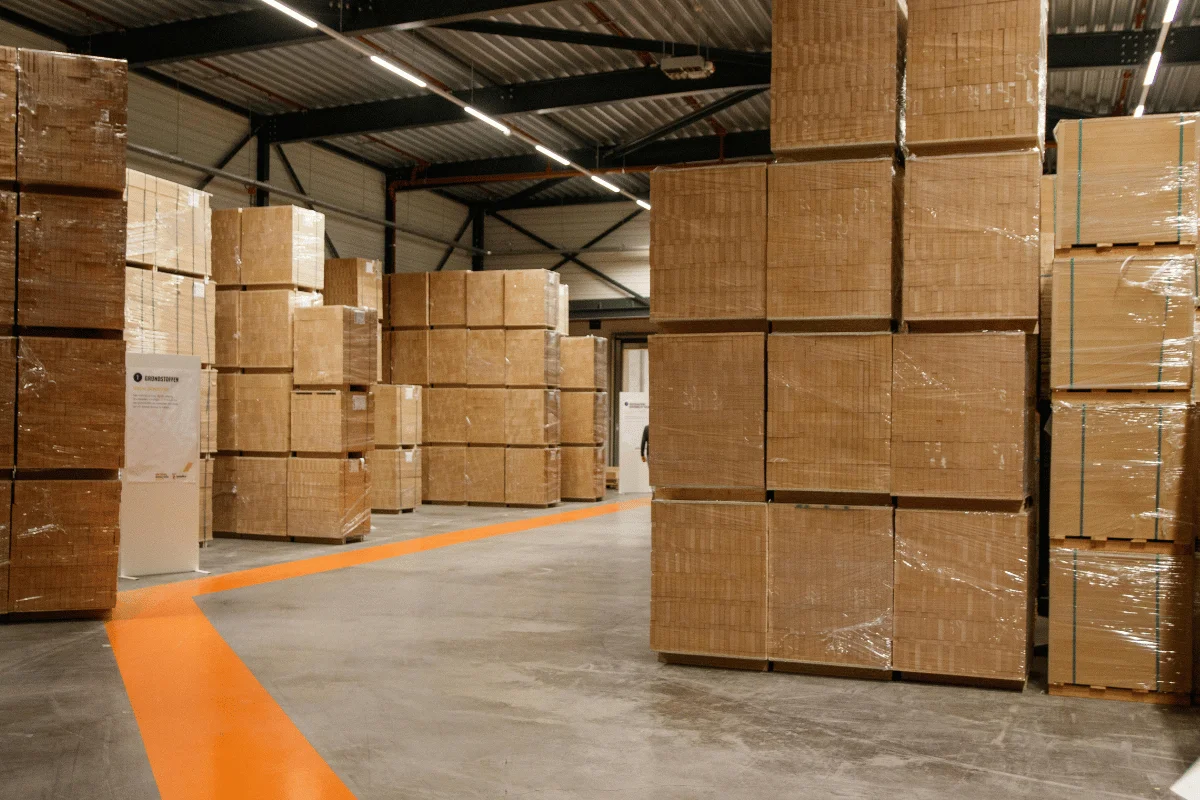
Switching to compostable foodservice packaging raises a common question. Does it change how you ship and handle your products? The short answer is a little, but less than most people expect.
The core freight workflow stays the same. You’re still using the same LTL and FTL carriers, the same bill of lading process, and the same pallet and carton systems.
What does change are a few material-specific details around heat tolerance, moisture sensitivity, and packaging specs that vary depending on the material type.
The sections below break it all down so you can plan confidently.
What Actually Changes When You Ship Compostables
The biggest variable is the material itself. Compostable products are not a single category. Ocean Calcium Sand-based straws behave a bit differently from PLA cutlery in transit.
Here’s a quick breakdown of the main materials you’ll come across:
- Ocean Calcium Sand (aragonite): A biogenic calcium carbonate sourced from cyanobacteria. It is naturally carbon-negative. OCS is the core mineral in many of NantBioRenewables’ premium compostable products.
- BioCal: A proprietary blend of aragonite, PLA, and other polymers, used for straws, plates, bowls, trays, and cutlery. Inherits the heat stability of aragonite.
- Cellulose diacetate: Made from wood pulp and used in straws. It is home compostable and marine degradable, which sets it apart from most other compostable materials.
- PLA (polylactic acid): A bioplastic made from fermented corn or sugarcane starch. It looks and feels like regular clear plastic and is widely used for straws and cutlery.
- Bagasse: It is the fibrous pulp left over after sugarcane is pressed for juice. It gets molded into plates, bowls, and clamshells, is much more heat-stable than PLA, and breaks down into reusable resources after use.
Knowing which material you’re shipping tells you exactly what precautions, if any, apply.
Here’s what changes across the board:
- Temperature tolerance: Ocean Calcium Sand-based, BioCal, and cellulose diacetate products should be kept below 95°F (35°C). PLA has a lower threshold and softens above 140°F. A truck trailer in Arizona or Texas in July can easily exceed both limits inside. Plan accordingly for summer shipments across all compostable materials.
- Moisture sensitivity: Cellulose diacetate and paper-based products absorb moisture. If your boxes sit in high humidity, the cardboard can lose 36 to 40% of its stacking strength. It’s more of a storage issue than a transit one, but add moisture barriers if you’re shipping through humid areas like the Gulf Coast or Southeast.
- Freight class: Every US shipment gets a freight class number that sets your rate. Compostable products tend to be less dense than plastic, which usually means a higher, pricier class for you. Classifications were updated to density-based tiers recently, so check your codes if you haven’t done so.
Beyond those 3 areas, your existing freight process stays the same. Your BOL (Bill of Lading, the shipping document that travels with your freight), your carriers, your pallet setup, and your claims process, none of that changes.
Compostable foodservice products are non-hazmat, meaning no special handling rules apply under US Department of Transportation regulations.
On cost, expect to pay roughly 5 to 15% more per shipment than plastic equivalents.
Side-by-Side Shipping Comparison
Here’s how the main compostable materials stack up against traditional disposables across the factors that matter most in transit.
Once you know which material fits your operation, finding a reliable supplier is the next step.
NantBioRenewables can be a good fit if you’re looking for US-made, certified compostable straws, tableware, and cutlery with no import tariff exposure.
Our compostable straws are certified by BPI, TÜV AUSTRIA OK Compost Industrial, CMA Approved, and USDA Biobased. For tableware and cutlery, the raw materials carry the certifications.
Products are made for hotels, restaurants, airports, and foodservice operations, with custom branding options available.
Temperature-Controlled Shipping: When You Need It and When You Don’t
The short answer is: it depends on what you’re shipping and where you’re shipping it.
- When you need to pay attention to temperature: Ocean Calcium Sand-based, BioCal, and cellulose diacetate products should be kept below 95°F (35°C) in transit. PLA has a lower softening point of around 130°F. On Southwest routes in summer, Arizona, Nevada, Texas, and Southern California, the inside of a standard dry van trailer can exceed both limits. At that point, products sitting under the weight of other boxes can be affected.
- When a standard dry van is fine: Shipping north or along the Pacific coast? A standard dry van works. The same goes for any route under 2 days or any load for which insulated pallet covers can keep the temperature below 95°F.
Follow these guidelines to protect your inventory:
- Store in a cool, dry place away from direct sunlight.
- Keep below 95°F (35°C) at all times.
- Avoid high-humidity environments, as moisture can accelerate the composting process.
- Keep products in their original packaging until ready for use.
- Do not store near heat sources such as ovens, radiators, or industrial equipment.
- Indoor storage is preferred, especially in regions with seasonal temperature swings.
According to Uber Freight’s 2025 rate guide, reefer spot rates averaged $2.62 per mile versus $2.25 per mile for dry van as of late 2025.
This is a $0.37 per mile premium that adds up to roughly $1,000 to $1,500 extra on a coast-to-coast FTL move.
Packaging Protection Requirements
Packaging for compostable products works the same way as any other foodservice freight. The main difference is knowing when to upgrade your boxes, add moisture protection, or reinforce your pallets based on where your shipment is going.
1. Your Boxes Matter More Than You Think
Your products travel inside cardboard shipping boxes, and those boxes have a strength rating. For most compostable products, a standard single-wall box works fine.
But if you’re shipping heavier items like bagasse plates, or sending freight through humid regions like the Gulf Coast or Southeast, step up to a thicker, double-wall box.
Research published in Applied Sciences found that high humidity can cut corrugated cardboard’s crush strength to as little as 22% to 34% of its normal rating. The exact drop depends on the board type.
On a hot, humid truck route, a weaker box may collapse before it reaches you.
2. Keeping Moisture Out
Your supplier will typically ship compostable products wrapped in a plastic sleeve or shrink wrap inside the box. That wrap does two things: it keeps the products together and acts as a basic moisture barrier.
If you’re in a humid region or products are sitting in storage for a while, it’s worth adding extra protection.
- Silica gel packets inside the box (the small desiccant packs you’ve seen in shoe boxes, which absorb moisture)
- A plastic poly liner inside the shipping box for an extra moisture layer
- Foil-lined inner packaging for ocean shipments, where products can spend 3 to 6 weeks in a container
3. Wrapping Your Pallets Correctly
Once your products are boxed and ready, they get stacked on a pallet and wrapped in plastic stretch film. This keeps everything in place during the journey.
Wrap the pallet at least four times, overlapping each layer by about 50%. Add cardboard corner pieces along the edges of the stack. These are cheap and stop the boxes from getting crushed at the corners during transit.
One thing to know: standard stretch film lets moisture through. If your shipment is passing through a wet or humid area, ask your carrier to add a plastic cover or shrink bag over the top of the pallet.
4. Who Is Responsible for What
Your supplier handles the basic packaging: plastic-sleeved products, standard boxes, and stretch-wrapped pallets for full truckload orders.
As the buyer or distributor, you’re responsible for the extra layer of protection when it’s needed. That means stepping in when the situation calls for it:
- Adding moisture barriers on humid routes
- Reinforcing the wrap if you re-stack pallets at your warehouse
- Using insulated pallet covers on hot summer lanes for PLA products
- Adding corner boards to any mixed pallet loads you build yourself
Working With Carriers: What to Communicate and How
No major US carrier has a special set of rules for compostable products. To your carrier, it’s just another shipment, so if you need anything handled a certain way, you have to spell it out on your paperwork. They won’t assume anything.
What to Put on the BOL (Bill of Lading)
Your shipping paperwork tells the carrier exactly how to handle your load. Make sure you include the following every time.
- “Heat-sensitive, keep below 95°F (35°C)” for Ocean Calcium Sand-based and cellulose diacetate products.
- “Do Not Stack” if your boxes aren’t built to hold weight on top of them
- Your pallet dimensions and total count
- The declared value of the shipment
- Any special delivery needs like a liftgate, residential address, or inside delivery
- A preferred delivery time window for any heat-sensitive compostable shipments in summer
Loading and Unloading Practices
A few things you do at the dock can make a real difference.
- In summer, load all compostable packaging toward the front of the trailer. It’s noticeably cooler there than near the rear doors.
- Don’t stack boxes on top of each other unless you know the boxes underneath can handle the weight.
- Schedule summer loading in the early morning before trailer interiors heat up.
- When unloading, make sure the forklift forks slide under the pallet itself. Avoid letting them hit the sides of the boxes directly. Cartons crush easily under that kind of contact.
If Damage Occurs
The Carmack Amendment (49 U.S.C. § 14706) is the federal law governing freight claims on US interstate shipments. Key timelines to know are below.
- 9 months from delivery: statutory limit to file a written claim.
- 30 days: most carriers require formal concealed damage claims within 30 days.
- 5 days: most carriers require notification of concealed damage within 5 days of delivery.
For claims to succeed, you need damage noted on the BOL or POD at time of delivery (signing clear forfeits most claims), photographs of damaged cartons and product, the commercial invoice, and the carrier’s claim form.
Do not dispose of damaged goods until the carrier inspects or formally releases them.
Seasonal Shipping Considerations
The time of year affects how you ship compostable products, mainly if you’re dealing with PLA.
Summer is when you need to pay the most attention, especially if you’re shipping PLA straws to the Southwest. A standard truck trailer runs about 30°F hotter than the outside air.
So if it’s 110°F in Phoenix in July, the inside of that trailer can hit 140 to 145°F, which is right around the temperature where PLA starts to soften. OCS-based, BioCal, and cellulose diacetate products ship fine in summer without any extra steps.
If heat exposure is a concern for your shipment, here are your options:
- Schedule pickups in the morning before the day heats up
- Use insulated pallet covers for shorter hauls
- Route through cooler roads like I-80 instead of I-10 or I-40
- Store summer inventory at a closer warehouse before the hot months hit
Winter is generally manageable for all compostable materials. Ocean Calcium Sand-based, BioCal, cellulose diacetate, and PLA products all handle cold temperatures without real problems.
The one thing to watch for is condensation: when a cold trailer gets opened at a warm loading dock, moisture forms on the outside of your boxes and can weaken the cardboard.
If you’re shipping to northern states in January or February, give yourself one extra day of stock just in case of weather delays.
Spring and fall are the easiest times to ship. Temperatures across most of the US sit between 50 and 80°F, which is comfortable for every material type.
If you can plan ahead, try to get your big restocking orders in between April and June before summer arrives.
International/Cross-Border Shipping
If you’re shipping into Canada or sourcing products from overseas, there are a few extra things to keep in mind.
US to Canada
If your compostable products are made in the US, shipping into Canada is fairly straightforward under the USMCA trade agreement. Canada recognizes the same compostability certifications you’re already likely to have, including BPI, ASTM D6400, and D6868.
Key documents for US-Canada shipments are listed below.
- Commercial invoice
- Canada Customs Invoice (required by CBSA for shipments over $2,500 CAD)
- USMCA Certification of Origin (required for shipments over $3,300 CAD into Canada to claim preferential tariff treatment)
- Bilingual English/French labeling is required for retail-facing products under Canada’s Consumer Packaging and Labelling Act
Plan for an extra 1 to 3 days on top of your usual transit time when shipping into Canada, as customs clearance takes additional time.
Tariff Exposure
If you source compostable packaging from China or Vietnam, import taxes are now one of the biggest cost factors in your supply chain, bigger than any shipping or handling issue.
Things have moved fast, and where things stand today is very different from a year ago.
What’s Currently in Effect for Chinese Goods
The effective rate on most Chinese goods right now is around 35% (as of May 2026). That’s a 10% Section 122 tariff plus a 25% Section 301 tariff, stacked on top of each other.
The IEEPA tariffs imposed in 2025 were struck down by the US Supreme Court on February 20, 2026. That removed one layer. But Section 301 tariffs are still fully active and are not refundable.
The 10% Section 122 tariff is also temporary. It expires around late July 2026. What replaces it is still unclear, and new Section 301 investigations are already underway.
The Bigger Issue for Compostable Packaging
There is a separate set of penalty duties that directly affects imported compostable foodservice products.
The ‘American Molded Fiber Coalition’ filed a trade complaint against Chinese and Vietnamese manufacturers of certain compostable packaging formats.
The US government issued anti-dumping and countervailing duty orders on plates, bowls, clamshells, trays, and lids from both countries. These took effect January 27, 2026. Some suppliers now face duties of up to 540% on specific products.
These duties are separate from the general tariff stack and were not affected by the Supreme Court ruling.
What This Means for You
- If you source compostable products from China or Vietnam, your costs have likely gone up significantly since January 2026.
- Products that made financial sense before may not anymore at current duty rates.
- The situation is still changing. New investigations are ongoing, and rates could shift again before the end of 2026.
A US-manufactured product is fully exempt from all of the above.
Damage Prevention Checklist (Downloadable)
Use this checklist before, during, and after every compostable product shipment.
Before Shipment:
- Check all boxes for damage (look for crushed corners, broken tape, or moisture marks).
- Make sure your pallet wrap is tight and covers all four corners.
- Take a timestamped photo of each loaded pallet before the truck picks it up.
- Check that your box count matches what’s on your shipping paperwork.
- Make sure your pallet height doesn’t exceed your carrier’s limit (usually 96 to 100 inches).
- Double-check your freight classification is up to date (density-based rules changed recently).
Loading:
- Put heavier items at the bottom of the pallet and lighter compostable boxes on top.
- Don’t double-stack boxes unless you’ve confirmed they can handle the combined weight.
- In summer, load all compostable items toward the front of the trailer where it’s cooler.
- Make sure your shipping paperwork notes any heat sensitivity or do-not-stack requirements.
- When unloading, make sure forklift forks go under the pallet, not into the box walls.
Carrier Communication:
- Confirm your carrier has your handling instructions before they pick up the shipment.
- Ask how long your pallets might sit at a transfer facility on your route (it can be 12 to 24 hours).
- Request a specific delivery window for all compostable packaging in summer heat, including Ocean Calcium Sand-based, BioCal, cellulose diacetate, and PLA products.
- Make sure your carrier has your declared shipment value and insurance details on file.
- Get a direct contact at the carrier in case you need to resolve an issue on the day.
In-Transit Monitoring:
- For compostable product shipments on summer Southwest routes, place a temperature logger (devices like Lascar EL-USB-2 or Onset HOBO run $15 to $100) in the box.
- For loads going through the humid Southeast, add a humidity logger (devices like Elitech RC-51H or Frigga M2H run $30 to $80).
- For high-value full truckload shipments, consider a real-time cellular tracker (devices like Tive Solo or FedEx SenseAware provide live location and condition updates).
At Receiving:
- Inspect the trailer and pallet positions before you start unloading.
- Photograph each pallet from multiple angles before removing the wrap.
- Check box corners and edges for crushing or moisture damage.
- Write down any damage on your delivery paperwork before you sign (never sign clear if you see damage).
- Ask the driver to counter-sign your damage notes.
- Open damaged boxes straight away and photograph the contents with the box in the frame.
- Keep all damaged goods until your carrier has inspected or released them.
- Report concealed damage within 5 days and file your formal claim within 30 days.
Frequently Asked Questions (FAQs)
Here are a few common questions distributors and procurement teams ask when evaluating compostable packaging logistics:
What is the difference between compostable and disposable?
Disposable just means single-use. Compostable means the product breaks down into nutrient-rich organic matter under the right conditions. Not all disposables are compostable, and not all compostable products break down the same way.
Which is better, biodegradable or compostable?
Compostable is the stronger claim. Biodegradable just means something breaks down eventually, with no timeframe or safety guarantee. Compostable products meet certified standards and break down into non-toxic organic matter within a defined period.
What is the difference between commercially compostable and home compostable?
Commercially compostable products need an industrial composting facility to break down. They require high heat, controlled humidity, and specific microorganisms. Home compostable products break down in a backyard compost bin at lower temperatures, typically within a few months.
What is ASTM D6400 or D6868?
These are the US certification standards that verify a product breaks down safely in industrial composting conditions. D6400 covers plastic items like PLA cups and cutlery. D6868 covers products with a compostable coating on a non-plastic base, like paper plates with a PLA lining.
Can I use the same warehouse for compostables and traditional plastic products?
Yes. Just keep compostables in a dry area below 60% relative humidity and away from heat sources. Standard racking and pallet storage works fine for everything else.
How do I know if my compostable products were damaged by heat in transit?
PLA straws and cutlery will show visible warping or fused stacking if they’ve been heat-damaged. OCS-based and cellulose diacetate products are more heat-stable and are unlikely to show visible deformation from transit heat alone.
A small temperature data logger inside your shipment gives you documented proof if you need to file a claim.
Compostable Packaging That Ships Like It Should
Shipping compostable products is more straightforward than most people expect. You do need to know a few things about heat and moisture, depending on what you’re shipping, but your existing freight setup works just fine.
Where it gets simpler is sourcing from the right manufacturer. NantBioRenewables makes its Wave Ware compostable straws, tableware, and cutlery in the US, which means shorter lead times, no import tariff exposure, and a supply chain you can actually rely on.
Products are built around Ocean Calcium Sand, a carbon-negative material that composts into nutrient-rich soil and holds up in real foodservice conditions.