


Managing inventory for compostable foodservice products differs from that for conventional packaging.
Compostable foodservice products have a shelf life. But plastic straws and PP containers can sit in a warehouse for years without issue. That one difference changes how you order, store, and rotate stock, and it’s something every distributor needs to plan for.
This guide walks you through the practical side of managing compostable inventory, from ordering the right quantities to rotating stock correctly.
And if you’d rather have an expert help you build the right program from the start, talk to a NantBioRenewables packaging specialist. As a U.S.-based manufacturer with monthly production capacity, we’re set up to make this straightforward for you.
Why Compostables Change Your Inventory Strategy
Here’s a rough idea of how long common compostable items last before they start to degrade:
- Products made from Ocean Calcium Sand, cellulose acetate, and PLA: 12 months
- Paper straws: 12 to 18 months (Most paper straws are not truly compostable. They contain a plastic film lining.)
- Molded fiber plates and bagasse trays: up to 36 months
Under proper and very specific storage conditions, compostable products won’t break down in your warehouse. However, as they’re near their shelf life, quality starts to decline. The products get brittle, warp, or discolor.
This creates a consideration with bulk ordering. Buying in large quantities usually gets you a 5% to 10% price discount, which sounds like a smart move.
But if you buy 12 months’ worth of a product that expires in 12 months, you’re leaving very little room for error. The discount doesn’t make up for throwing away expired cases.
On top of that, holding inventory costs money too. Inventory carrying costs typically run 20% to 30% of total inventory value per year when you factor in storage space, tied-up cash, and insurance.
This is where working with a domestic U.S. manufacturer like NantBioRenewables makes a real difference. Because we manufacture in the U.S., we can produce and deliver on shorter, more frequent cycles.
That means you can order smaller quantities more often, stay well within your shelf-life window, and avoid the bulk-ordering trap entirely.
There’s one more thing that matters here. The order in which your staff picks and ships products.
If newer stock gets loaded at the front of a shelf and older stock gets pushed to the back, the old cases never move. They just sit there aging until they’re unusable.
Preventing this is called FIFO (First In, First Out), and the next section covers how to set it up properly.
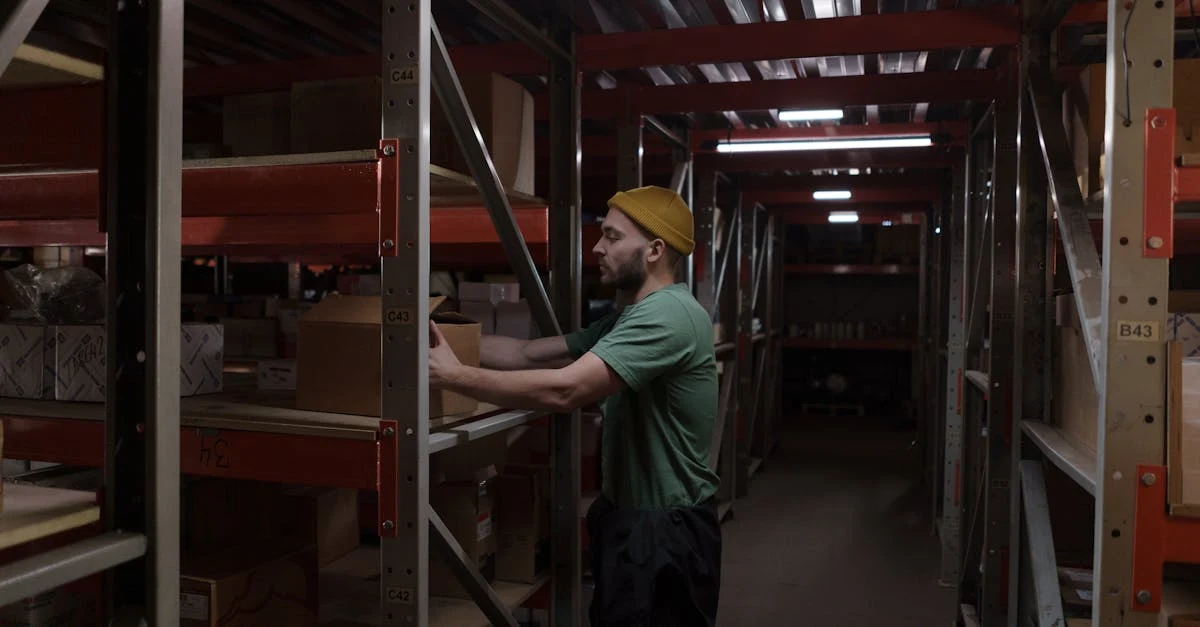
FIFO Implementation for Compostable Products
FIFO stands for First In, First Out. The oldest stock in your warehouse ships first. For compostable products, this is a requirement.
There’s a more accurate version called FEFO: First Expired, First Out. The difference matters when you’re buying from multiple suppliers.
2 pallets received on the same day might carry manufacture dates 4 to 6 months apart, depending on where each was produced.
FIFO by receipt date would ship the wrong case first. FEFO by expiry date ships the case that’s actually closest to expiring.
That’s why, for compostable SKUs, run FEFO.
To make this work, you need your suppliers to print both a manufacture date and a best-by date on every case. Some do this by default. Many don’t. Make it a condition of your supplier agreement for any compostable product.
How you enforce FEFO depends on what tools you have available.
If You Have a Warehouse Management System (WMS)
Most modern WMS platforms support lot tracking with FEFO logic. PackemWMS, Made4Net, Da Vinci Unified, and Zenventory all handle it.
What you need the system to do:
- Capture the manufacture date, expiry, and lot number at receiving.
- Block pickers from pulling a newer lot when an older one is available.
- Send aging alerts at 90, 60, and 30 days before expiry so you can move stock before it expires (probably run a flash sale deal).
If You’re Running Manual Processes
You don’t need any special software to do this. A few simple tools work just fine:
- Color-coded labels by quarter received: Stick a colored label on each case when it arrives. Red for Q1, blue for Q2, green for Q3, yellow for Q4. Your staff knows to always grab the oldest color first when picking an order.
- Carton flow racks: These are shelves on a gentle slope. You load new stock in from the back, and gravity moves it to the front over time. Whoever picks from the front always gets the oldest case first, with no effort required.
- A simple spreadsheet: One row per product, showing when each batch arrived, when it expires, and how many cases are left. Takes 5 minutes to update and stops aging stock from slipping through the cracks.
Once a month, walk through your warehouse and check the date codes on your compostable cases. Anything within 90 days of expiry needs to move fast, so flag it for priority sales or a quick discount.
The most common mistake is loading new stock in front of old stock on a regular shelf rack. Your staff grabs from the front, the old cases get buried at the back, and you only find them when it’s too late.
Carton flow racks fix this automatically, so you don’t have to rely on anyone to remember the rules.
How to Calculate the Right Order Quantity
When you order too little, you run out of stock and lose sales. When you order too much, inventory sits in your warehouse aging toward its expiry date. There’s a formula that helps you find the right amount to order each time.
The EOQ Formula
EOQ stands for Economic Order Quantity. Here’s how it works:
EOQ = √ (2 × Annual Demand × Order Cost ÷ Annual Holding Cost Per Unit)
It sounds complicated, but the idea behind it is simple. Every time you place an order, you spend money on the admin work that goes into it, typically around $100 per order.
And every day that inventory sits unsold in your warehouse, you’re paying for the storage space, the cash tied up in it, and the insurance on it.
EOQ finds the order size where those two costs balance out.
Here’s a worked example. Let’s say you sell 240,000 compostable straws per year. Placing each purchase order costs $100 in internal overhead. Your holding cost per straw is $0.03 per year, roughly 30% of a $0.10 unit cost.
EOQ = √(2 × 240,000 × 100 ÷ 0.03) = roughly 40,000 units, or about 2 months of supply.
But Shelf Life Adds Another Limit
EOQ doesn’t account for expiry dates. So for compostable products, you need a second check.
A safe rule of thumb is that you never order more than 55% of a product’s shelf life in months of forward supply. For a 12-month shelf-life product, that means no more than 6.6 months of supply at a time (12 × 0.55 = 6.6 months).
Using the same example: 12 months × 0.55 × 20,000 straws per month = 132,000 units maximum. Your EOQ of 40,000 is well below that, so the shelf-life limit doesn’t cause a problem here.
The shelf-life limit bites hardest on slow-moving SKUs. If you only sell 5,000 units of a specialty straw per year, EOQ might tell you to order 6 to 12 months of supply at once. But if that straw has a 12-month shelf life, ordering 12 months of supply upfront is risky.
Cap your order at 6 months of demand and order more frequently instead.
When to Reorder
Once you know how much to order, you need to know when to order. The reorder point is the stock level at which you place your next order, giving your supplier enough time to deliver before you run out.
Reorder Point = (Average Daily Usage × Lead Time in Days) + Safety Stock
Safety stock is a small buffer you keep on hand to cover unexpected demand spikes or supplier delays. More on that in the next section.
Back to the straw example. You sell 657 straws a day on average, and your U.S. supplier takes 28 days to deliver.
If you keep 2,000 straws as a safety buffer, your reorder point is (657 × 28) + 2,000 = roughly 20,400 straws.
When your stock drops to that level, place the next order.

Supplier Lead Times and What They Mean for Your Inventory
Lead time is how long it takes from placing an order with your supplier to receiving it in your warehouse. For compostable products, this matters more. Because every day in transit is a day off the product’s shelf life.
A U.S.-based manufacturer like NantBioRenewables ships standard stock items in 3 to 4 weeks.
An overseas supplier, typically based in China or Southeast Asia, takes 4 to 6 weeks just to produce the order, then another 3 to 5 weeks for the shipment to arrive by sea. That’s 8 to 14 weeks total, often closer to 10 to 12 weeks for custom or branded orders.
If your compostable straw has a 12-month shelf life and it spends 12 weeks traveling from an overseas factory to your warehouse, it has already used up roughly 23% of its shelf life before you’ve touched a single case.
How Much Buffer Stock Should You Keep?
Buffer stock (also called safety stock) is a small amount of extra inventory you keep on hand to cover two situations:
- Demand is coming in higher than expected, or
- Your supplier is delivering later than usual.
The formula for calculating it is:
Safety Stock = (Maximum Daily Usage × Maximum Lead Time) − (Average Daily Usage × Average Lead Time)
For example, if you sell 100 cases per day on average but have hit 130 cases on your busiest days, and your supplier usually delivers in 28 days but once took 40 days, your safety stock would be (130 × 40) − (100 × 28) = 5,200 − 2,800 = 2,400 cases.
Size your safety stock around how much your daily demand varies. If your supplier keeps missing delivery windows, adding more stock to your shelves just means more product aging before it sells.
NantBioRenewables makes compostable foodservice products in Gadsden, Alabama, across materials including Ocean Calcium Sand, cellulose acetate, PLA, and polypropylene.
Because everything is made in the U.S., you get faster delivery with no ocean freight delays and no customs holdups eating into your shelf life. There’s a lot more to the U.S. manufacturing advantage beyond lead times, too.
If you’re evaluating your compostable supplier options, request a sample to try the product first.
Seasonal Stocking for Compostable Products
Demand for compostable products follows a predictable calendar:
- Straws, plates, and cutlery demand peaks in summer across stadiums, events, and outdoor dining.
- Institutional dining (schools, hospitals, universities) ramps up in August and slows in summer.
- Holiday catering pushes Q4 volume up across hospitality accounts.
The problem is that summer, your busiest season for cold drinks, is also the worst time to have large amounts of compostable packaging sitting in a warehouse.
These start to soften above 95°F (35°C). Non-climate-controlled warehouses can easily hit that in July and August.
A few adjustments that help:
- Order in 30 to 60-day cycles during the summer rather than one large pre-season bulk buy.
- Keep compostable inventory in the coolest part of your warehouse, away from loading dock doors and exterior walls.
- Inspect a sample case from each compostable lot you receive between May and September. Warping or stickiness at receiving means the product was likely stressed in transit.
SKU Rationalization for Compostable Lines
SKU is short for Stock Keeping Unit. It’s just a way of referring to each individual product you carry. A compostable straw in one size is one SKU. The same straw in a different size is another SKU.
The more compostable SKUs you carry, the more chances you have of slow-moving inventory aging out before it sells. So it’s worth being deliberate about which ones you add and which ones you cut.
Add a new compostable SKU when:
- At least one customer has made a written commitment to buy it.
- The expected annual volume is high enough to justify the minimum order quantity from your supplier.
- The certifications your customers need, such as BPI or TÜV OK Compost, are already confirmed on the product.
Remove a compostable SKU when:
- It turns over less than 3 times per year.
- More than half the stock on hand has used up more than half its shelf life without moving.
- Expired cases exceed 2% of annual receipts for that SKU.
Review your compostable catalog at least twice a year. A SKU that stays in your system just because nobody got around to removing it will keep generating small orders that sit and age.
Customer Order Pattern Considerations
Compostable products are still new for most accounts. That means you’re often guessing at demand without much sales history to rely on.
Here are a few approaches that work:
- Start with what the customer already buys: Look at how much of the equivalent plastic item they order. A reasonable starting estimate for compostable demand is 5% to 15% of that volume in year one, growing toward 25% to 50% over three years, especially for accounts in states with active packaging rules like California, New York, and Washington.
- Get written commitments from large accounts: If a hospital system or university wants compostable products, sign a supply agreement before you place the supplier order. A quarterly volume commitment gives you a real number to order against, so you’re not guessing.
- Pool small orders together: Independent restaurants ordering 1 to 4 cases at a time are expensive to service individually. Group them into weekly delivery routes to cut your cost per case and reduce how quickly broken-case stock ages in storage.
- Tell customers your lead times upfront: 2 weeks for stock items, 4 to 6 weeks for custom orders, and 8 to 12 weeks for new SKUs sourced overseas. Customers who know this plan ahead of time and order earlier.

Inventory Optimization Worksheet (Downloadable)
Use this worksheet to calculate the right order quantity and reorder point for each compostable SKU you carry.
Run this calculation for every compostable SKU in your catalog. The ones where the shelf-life cap is lower than EOQ are your highest-risk items. Those are the SKUs where you’re most likely to be over-ordering today.
Frequently Asked Questions (FAQs)
Below are a few common questions distributors ask when setting up compostable inventory systems.
How Long Do Compostable Straws Last in Warehouse Storage?
For Ocean Calcium Sand and cellulose acetate straws, plan for a 1-year shelf life. Store them below 95°F (35°C), away from direct sunlight, in a dry place, and in their original packaging.
Moisture speeds up the composting process, so humid storage environments are the biggest risk.
Do Certifications Like BPI or TÜV Say Anything About Shelf Life?
No, they don’t. Certifications like BPI, CMA Approved, TÜV Austria, and USDA Biobased cover how a product breaks down after disposal and verify compostability claims. For shelf life, you need to ask your supplier directly and get it in writing.
What Is the Difference Between FIFO and FEFO?
FIFO ships your oldest-received stock first. FEFO ships whichever stock expires soonest first. If you buy from multiple suppliers, FEFO is more accurate because two cases received the same day can carry different manufacture dates.
When Does It Make Sense to Use a Domestic Supplier Over an International One?
Domestic U.S. suppliers deliver in 2 to 4 weeks. International suppliers take 8 to 12 weeks, which means up to 25% of a 12-month shelf-life product is consumed before you’ve touched a case. For fast-moving or seasonal SKUs, domestic sourcing is the safer choice.
What Happens If Compostable Inventory Sits Too Long in a Warehouse?
The products get brittle, warp, or discolor, and your customer will think the product is defective. Expired compostable cases usually can’t go to an industrial composter either, so they end up in a landfill.
Build a Smarter Compostable Supply Chain with NantBioRenewables
More distributors are adding compostable products to their catalog. The ones who manage inventory well will hold onto those accounts long-term. Choosing the right supplier makes that a lot easier.
NantBioRenewables makes Wave Ware™ compostable straws, cutlery, plates, trays, and bowls in Gadsden, Alabama.
The materials start with carbon-negative Ocean Calcium Sand. Products are certified for both home and commercial composting, and built to match the strength of conventional plastics.
U.S. manufacturing means your orders are tariff-free with a smaller carbon footprint than imported alternatives.
See the full Wave Ware™ product range and find the right fit for your accounts, or request a sample to try the product before you commit.