


Helping customers find composting solutions has quietly become part of the distributor’s job. The request rarely arrives that way, though. What arrives is a complaint.
A customer switches to compostable straws and rolls them out across 12 locations. Three weeks later, they discover their hauler tips the whole lot into the same landfill as the regular trash.
Since you sold them the straws, the call lands on your desk.
The good news is that almost everything they needed to know beforehand is public. One conversation with the right composting facility answers most of it.
Below you’ll find how to check composting access in your customer’s area, what to ask that facility, and what to say when composting isn’t an option yet.
Why Composting Access Is Worth Your Time as a Distributor
Composting is really the end customer’s job.
Once the order ships, what happens to those straws is on the business running the site, since they own the disposal contract, the bins, and the decision about where used product goes.
However, more often than not, they don’t know where the nearest composting facility sits. If you help them close it with a few phone calls, you earn their trust. And at the same time, you’re protecting the revenue you already earned.
When your customer buys compostable packaging with nowhere to send it, the product looks like the failure. You get the complaint, the credit request, and a colder conversation at renewal.
Commercial Composting and Residential Curbside Follow Different Rules
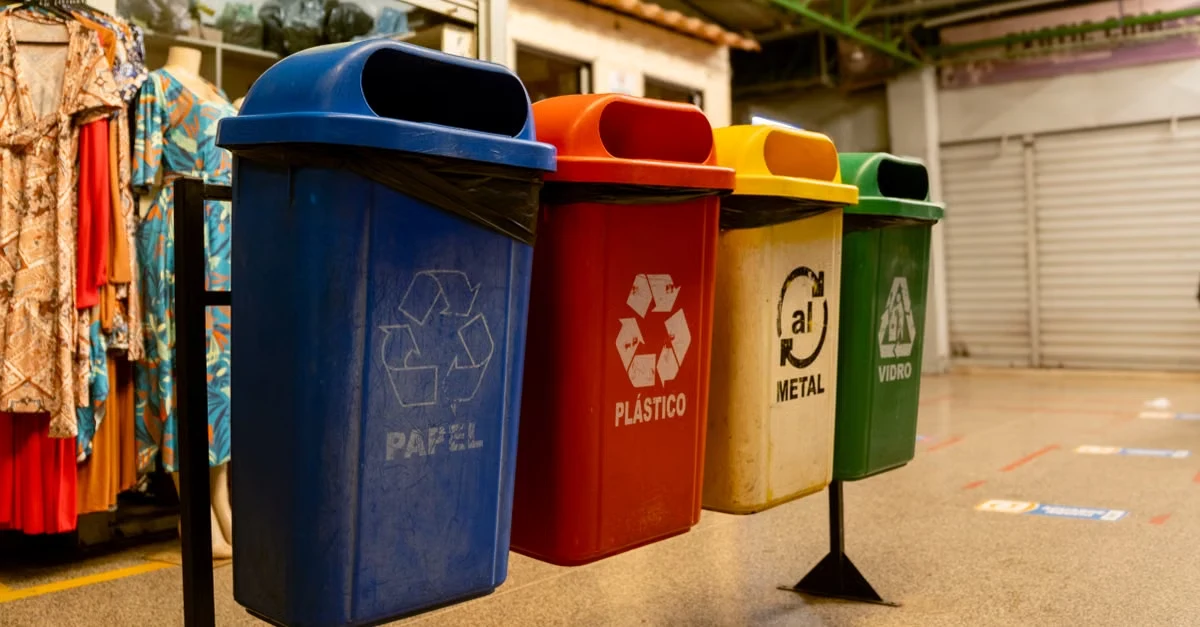
Used packaging leaves your customer’s site by one of 2 routes. Each route has its own rules about what it will take.
Stadiums, hotels, theme parks, hospitals, university dining halls, and corporate cafeterias make the strongest first candidates, because they run on the commercial route.
Are Compostable Straws Accepted in Municipal Compost Programs?
Rarely through the curbside bin, and far more often through a commercial program.
Curbside collection usually takes only food scraps, so a straw dropped in a home bin gets screened out.
Acceptance sits with the facility instead, and roughly 145 of the 200+ US facilities that handle food waste also take certified compostable packaging.
Straws are a tougher case than trays, since small items are the hardest to catch during screening. Have your customer confirm with their own facility before assuming anything.
How to Confirm a Local Facility Can Process Compostable Packaging
Confirmation means contacting the composting facility that serves your customer’s address and getting written confirmation for the exact product.
Five steps, and your customer can finish them in an afternoon:
- Find the facilities that serve that address: Use the directories in the next section. Coverage is regional, so a facility 60 miles out may run different rules.
- Ask about the item instead of the category: Facilities decide acceptance item by item, so ask about compostable straws or tableware by name.
- Ask which certification they require and which technology they run: A facility using windrow, aerated static pile, or covered in-vessel may only accept products field-tested in that method.
- Send spec sheets and certificates: The facility checks your customer’s item against its own acceptance list.
- Get the answer by email: A written yes backs up your customer’s composting claim later, and a written no tells you to stop before it reaches a menu.
If the reply comes back vague, ask what the state permit allows and who buys the finished compost.
Permits define which feedstocks a facility can legally take, and some compost buyers reject anything from a facility that has processed packaging.
The Compost Manufacturing Alliance (CMA) field-tests products inside working facilities and approves them by method, allowing 90 days for windrow, 60 for modified aerated static pile, and 46 for covered in-vessel.
Lab certification runs on separate numbers. ASTM D6400 and D6868 ask for 90% disintegration within 84 days and 90% biodegradation within 180 days.
The US Composting Council notes that those 2 figures are often confused.
At NantBioRenewables, our compostable foodservice packaging holds BPI, CMA Approved, TÜV Austria, and USDA Biobased certifications.
Certifications vary by product, though. Our compostable straws carry TÜV Austria, BPI, and USDA Biobased certifications, while tableware and cutlery are certified at the material level.
CMA Approved is the one to lead with on these calls, since composters tested the packaging in their own operations and confirmed it doesn’t damage their compost.
Our guide to certification validity questions covers what each mark proves.
Facility Finders and Directories Worth Sharing With Customers
The directories below are searchable databases where anyone can look up composting sites, verify certifications, or find drop-off points by zip code.
Some are run by BPI, some by the US Composting Council, and others by state environmental agencies. Most of them are free and public.
Questions Your Customers Should Ask a Composting Facility
Before your customer calls, make sure they know what to ask. Facilities won’t always bring up contamination limits or minimum volumes on their own, so going in with a list saves a second call.
Here are the questions your customers should ask a composting facility (organized by topic):
- Acceptance: Do you take compostable packaging, or only food scraps? Which items do you actually accept?
- Certification: Which certifications do you go by? Do we need CMA approval for the type of composting you run?
- Contamination: How much contamination can a load have before you turn it away? What happens if someone throws in a non-certified item that looks compostable?
- Logistics: Do you pick up, or do we drop off? How often, what is your minimum, and do you want a particular bin liner?
- Cost: How do you charge for this, and what does it cost us if a load comes in dirty?
- Documentation: What do you need from us on paper? Can you send tonnage reports we can use for our sustainability reporting?
Tell your customer to have the paperwork ready before they call. That means spec sheets, BPI- and CMA-approved documentation, TÜV Austria and USDA Biobased certificates where they apply, and PFAS records.
NantBioRenewables products are also PFAS-free, which matters for healthcare, school, and compliance-driven accounts.

How Large Venues Compost Foodservice Disposables at Scale
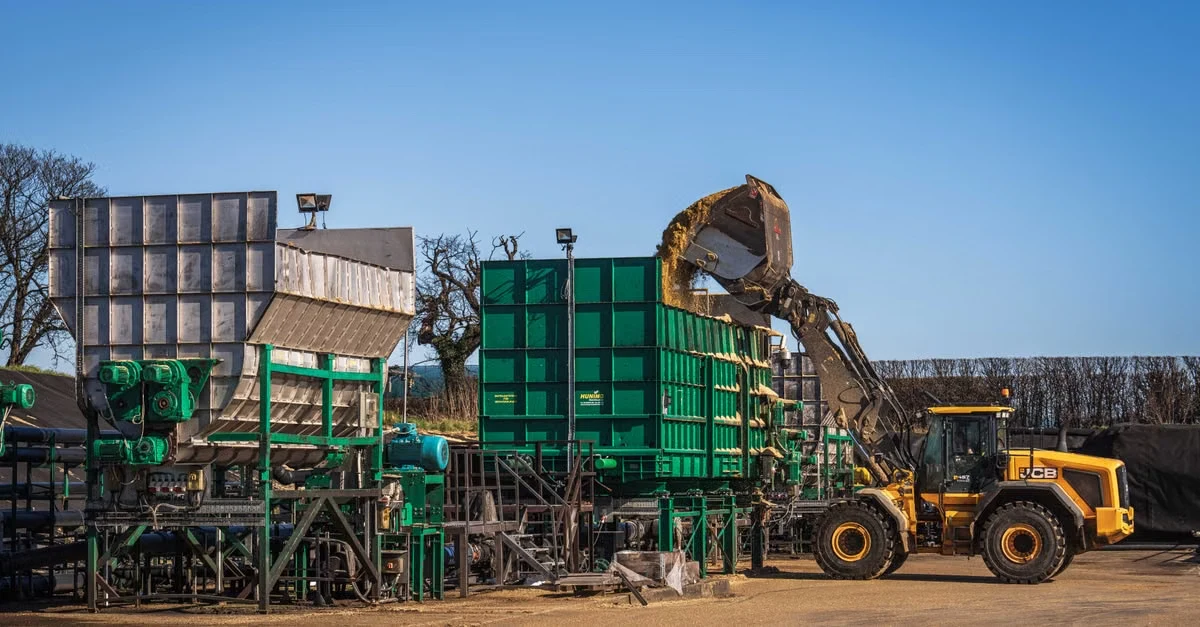
Large venues start by selling only compostable disposables. Food and used packaging then go into the same organics bins. A hauler collects those bins and drives them to a commercial composting facility.
Sorting happens twice over. The staff pulls the waste apart during service, then a crew works back through the bins once the event ends.
Five things hold that system together. Dropping any one of them tends to break the rest:
- One product standard across the site: Every disposable sold inside the venue is compostable. That way, whatever lands in an organics bin already belongs there and staff doesn’t have to guess.
- Kitchen collection first: For venues with a permanent food program, compostable bins go into the kitchen before public areas. Kitchen waste is staff-controlled, so the stream stays clean while the habit gets established. For single-event venues, all bins go out at once.
- A hauler contract before purchasing: The composting facility decides what it will accept. That decision needs to happen before the venue locks in which products to buy.
- Clear bin signage: Pictures on bin labels work better than text. A photo of a compostable tray is harder to misread than the word “compostables.”
- A post-event sort: After the crowd leaves, a crew goes back through the bins and pulls out anything the public got wrong.
None of it works if the products fail during service. For example, if a compostable straw goes soft before the drink is finished, guests notice. As a result, the venue stops reordering.
Before your customer standardizes every concession stand and kitchen on compostable items, have them run the real products through a busy shift first.
At NantBioRenewables, we manufacture the compostable straws, plates, bowls, trays, and cutlery these programs run on, from a plant in Gadsden, Alabama.
Our products are PFAS-free. They’re available in custom colors and branded wrappers that overseas suppliers rarely offer. We also brand plates, bowls, and trays with logos at the bottom.
Standard stock ships in 2 to 4 weeks, compared to 8 to 12 weeks from overseas.
Request a sample by emailing [email protected] and let your customer run them through a full service period before they commit.
What Distributors Can Teach Customers About Contamination
Contamination is the thing composters complain about most because wrong items in a load cost them time and money.
Conventional plastic makes up 85% of the contamination composters receive by volume, and managing it consumes roughly 21% of their operating costs.
Meanwhile, 8 of the 9 studied facilities accepting compostable packaging showed no detectable compostable material in their finished compost.
As a result, thresholds are strict: 45 surveyed facilities run zero tolerance, and 66 more require contamination below 5%.
Three things worth teaching every customer:
- Look-alikes cause most of the damage: Non-compostable items that look identical to certified ones enter the stream constantly, so quality control during purchasing has to be stricter.
- Color coding helps but proves nothing: Washington and Colorado require green, beige, or brown tinting or a stripe, though the laws don’t stop non-compostable items from using the same colors. Our mislabeling guide covers this issue.
- Bin placement drives behavior: People use whichever bin is closest. An organics bin standing alone across the room gets ignored. So pair one with every trash can and put matching signage on both.

Where Composting Infrastructure Stands Across the States
Composting access is set by 2 kinds of state law.
The first kind forces businesses to keep food waste out of the trash. Rules like these create demand, so haulers add organics routes and new composting facilities open.
The second kind governs labeling. Those laws set what a product must be certified as, and sometimes what color it must be, before anyone calls it compostable.
Both matter to your customer. One decides whether composting is available near them; the other decides what they can legally buy and advertise.
Roughly 12 states now run an organics mandate of some kind, up from 2 a decade ago.
The South and Mountain West have far fewer facilities. A customer with sites in several states will see the program run smoothly in some and stall in others.
Worth telling them that before they roll anything out nationally.
What to Say When Local Composting Isn’t Available
Tell your customer before they order, because a composting claim with no facility behind it is a claim they cannot defend.
The rule comes from federal advertising law. Under the FTC Green Guides, a product can be called compostable with no further explanation only where composting is available to most people in the area it sells.
If that test fails, the label has to say so, and calling a product degradable when it is headed for a landfill counts as deceptive.
For your customer, that means keeping composting claims off menus, packaging, and signage until a facility is lined up. Raising it early protects them from a complaint, and it protects you from being the supplier who let it happen.
Our overview of greenwashing protection goes deeper into the wording. None of this has to end the conversation, though, because there are usually other ways to get organics collected:
- Private hauler routes: A missing city program doesn’t mean no service, since commercial organics haulers cover plenty of areas a city skips.
- Drop-off partnerships: Hundreds of drop-off sites operate around the country, and some will take business volumes if your customer asks.
- On-site processing: In-vessel units are sealed machines that compost on site, which suits large campuses and resorts that can use the finished compost on their own grounds.
- A phased start: Some facilities take food scraps but not packaging. Starting with kitchen scraps builds the collection habit, so packaging can join later if that facility opens up.
Before any of that, do a waste audit. Understanding what your customer actually throws out tells you whether a collection program is worth paying for.
One option to rule out is anaerobic digestion, where food waste breaks down in a sealed tank to produce gas. Anaerobic digestion comes up in these conversations because haulers pitch it as an alternative to composting.
It won’t help here, since nearly all digesters strip packaging out before anything goes in the tank. So compostable items gain nothing from it.

Templates and Follow-Up That Keep a Program Running
Two things keep a program from stalling out after the first order:
- A ready-made email your customer can send.
- A check-in schedule you can stick to.
Give customers an email template they can forward with minimal edits. For example:
Subject: Compostable packaging acceptance at your facility
Hi [name],
We run [number] foodservice locations in [city] and are evaluating certified compostable packaging. Could you confirm whether you accept it alongside food scraps, and which certifications you recognize?
We would also like to understand your contamination threshold, minimum volumes, and whether you provide diversion tonnage reports.
Happy to send specifications and certificates ahead of a call.
Thanks,
[name]
Once the program is running, keep checking in. A call in the first week confirms the bins and signage went up, and another a month later tells you whether the hauler is getting clean loads.
After that, a quarterly check is enough. Ask what the facility is actually composting, swap out any item that keeps getting rejected, and flag any state rule that has changed since your customer started.
This sustainability FAQ template has ready answers that your customers can drop straight into a catalog, a menu insert, or a reply email.
How NantBioRenewables Supports the Composting Conversation
None of the above advice matters if the packaging itself doesn’t hold up on the job. You need a reliable manufacturer and supplier you can trust. Otherwise, you’re stuck with a middleman supplier who doesn’t produce their own product.
NantBioRenewables manufactures the Wave Ware line of straws, plates, bowls, trays, and cutlery at its own facility in Gadsden, Alabama. Our product line isn’t built on just one material.
It includes Ocean Calcium Sand, cellulose diacetate, PLA, and polypropylene.
Ocean Calcium Sand is carbon negative. It pulls CO2 from the atmosphere as it forms. The best thing about our products is that they match conventional plastic in look and strength.
Also, manufacturing in the US means shorter lead times, no tariffs, and third-party certifications on hand whenever a facility asks for them. Request a sample by emailing [email protected].