


Getting a customer to switch from conventional to compostable packaging comes down to one thing: reducing their perceived risk.
Your buyer has customers to keep happy, operations to protect, and a budget to defend. If the switch goes badly, that’s on them.
This guide covers the 10 most common performance objections your sales team will hear about compostable foodservice products, including straws, plates, and cutlery.
For each one, you’ll find the real concern behind the words, a response you can use on a call, and the proof to back it up.
Why Performance Objections Are Really About Risk
Most buyers who push back on compostable packaging have heard a story from someone they know.
A colleague switched to paper straws and got flooded with complaints. A competitor tried compostable plates, and the food slid off onto the table. Those stories stick in the back of their mind.
The psychology here is that buyers weigh the downside of being wrong more heavily than the upside of being right.
A failed switch means customer complaints, a return to the old product, wasted budget, and an awkward conversation with management. That’s a lot to risk on a new supplier’s say-so.
This is why proof matters more than enthusiasm.
Telling a buyer your product performs well lands differently than showing them a BPI certification, an ASTM D6400 test report, and a sample they can torture-test themselves.
The goal is to reduce the perceived risk of switching.
The Top 10 Performance Objections
Below are the 10 most common objections, how to respond, and what proof to have ready.
Objection 1: “I’ve heard compostable straws get soggy and fall apart.”
What They’re Really Asking: Will my customers complain? Am I going to have to replace these every 20 minutes?
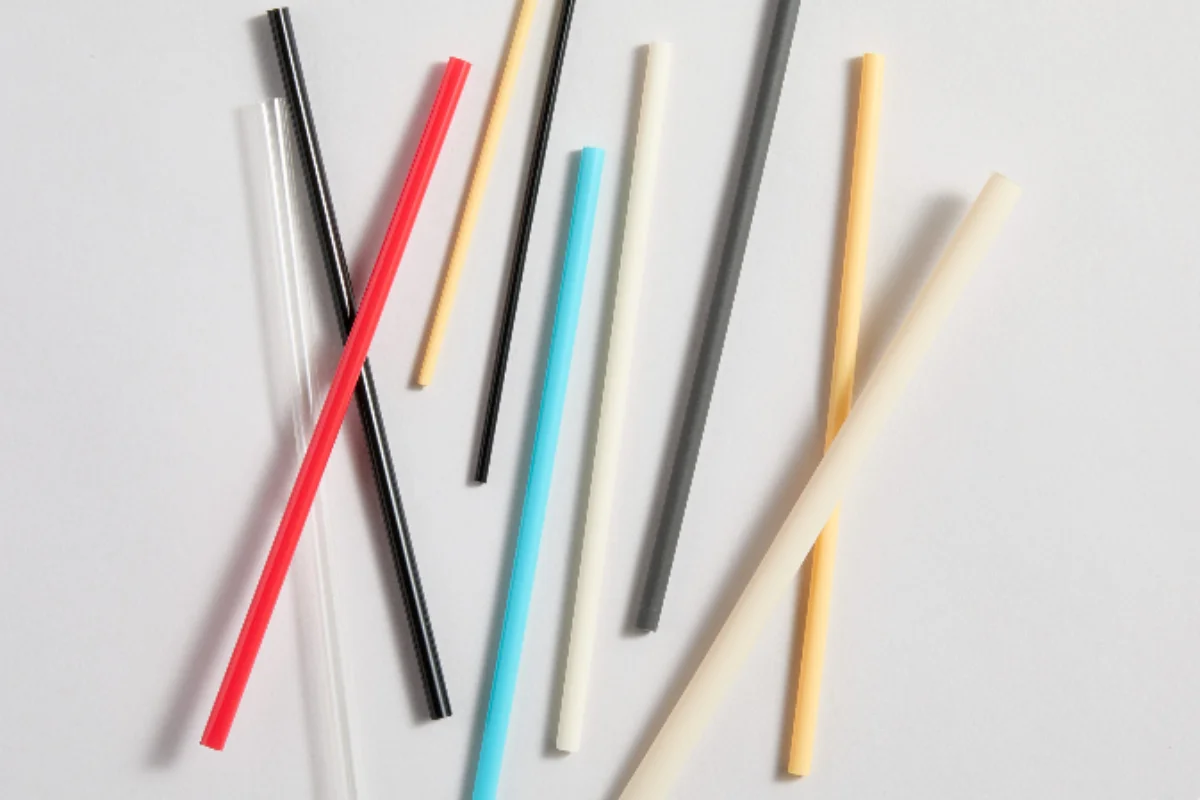
Response: “That’s a totally fair concern, and honestly, it comes from a real experience. The soggy straw problem is a paper straw problem. Our straws are made from ocean calcium sand and cellulose acetate. They hold up in cold and warm drinks without any softening or breakdown. You can leave one in an iced drink for hours, and it’ll still feel exactly like a regular plastic straw. We’d love to send you samples so you can test them yourself before you commit to anything. Just email us at [email protected]”
Offer Samples? Yes, immediately. Send a quantity large enough to actually test. A handful of straws per format is the minimum.
Follow-Up Action: Check in 7 days post-delivery. Ask specifically about the iced drink test.
Objection 2: “Will they work in hot coffee and tea?”
What They’re Really Asking: Are my barista stations going to be a problem?
Response: “Great question, and we want to be straight with you on this one: our straws are designed for cold and warm drinks. Hot coffee or tea through a straw really isn’t a common use case anyway. Most of your customers drinking hot drinks aren’t using straws at all. If you’re thinking about blended drinks, frappes, or iced lattes, that’s exactly where our straws shine. And if you need something for cold and warm food service, our plates, bowls, and cutlery are built for that. Tell us what your menu looks like, and we’ll point you to the right products.”
Offer Samples? Yes, matched to confirmed cold-drink applications. For warm-food needs, send tableware samples.
Follow-Up Action: Map out the buyer’s full drink and food menu before the next call so you’re recommending the right product for each use case.
Objection 3: “Are they strong enough for smoothies and thick drinks?”
What They’re Really Asking: Will my smoothie customers be frustrated trying to suck through a weak straw?
Response: “Yes, we have the perfect sizes for those drinks. If you’re serving smoothies, thick shakes, or bubble tea, you’d want our larger diameter straws, which handle the suction the same way a plastic jumbo straw does. Your standard soda or iced coffee would use a narrower one. Send us your drink menu, and we’ll match you to the right sizes. We can ship samples, so your team can actually test them on your drinks before you order.”
Offer Samples? Yes. Send 6mm and 8mm so they can compare on their actual drinks.
Objection 4: “What about cold drinks that sit for a while? We have slow drinkers.”
What They’re Really Asking: What happens if the drink sits on the table for an hour?
Response: “Your slow drinkers won’t have a problem at all. These straws are made to stay firm in cold drinks. That’s the whole point of the material we use. A customer sitting with an iced latte for 45 minutes, an hour, or even longer will still be using the same straw they started with, no softening, no squishing. Drop one in a glass of ice water when we send samples, and you’ll see exactly what we mean.”
Offer Samples? Yes. Suggest the buyer drop one in a glass of iced water and check it after 2 hours.
Objection 5: “Do they have a weird taste or smell?”
What They’re Really Asking: Will my customers taste the straw instead of their drink?
Response: “They don’t have any weird taste or smell. And that’s one of the things people notice right away when they switch from paper straws. Paper has that cardboard flavor that some customers really dislike. Our straws are completely neutral. Your drinks taste like your drinks. If you want to do a quick taste test when samples arrive, put one in a glass of water and try it. That’ll tell you everything you need to know.”
Offer Samples? Yes. A taste test is easy to run and usually converts skeptics on the spot.
Objection 6: “Will they work with our existing dispensers?”
What They’re Really Asking: Do I need to buy new equipment?
Response: “Your current dispensers will almost certainly work. Our straws come in the same standard diameters as regular plastic straws (6mm, 7mm, and 8mm), with lengths ranging from 7.75 to 10.25 inches, available wrapped or unwrapped. Whatever dispensers you’re already running, these should drop straight in. Just tell us what you’ve got and we’ll confirm the fit before you place your first order.”
Offer Samples? Yes, so they can physically test fit before committing.
Objection 7: “Are they as durable as plastic straws?”
What They’re Really Asking: Will these break or bend under normal use?
Response: “For cold drinks, yes, they perform the same way. They flex the same, insert into lids the same, and feel the same in your hand. The only real difference is what happens after the drink is done. These break down instead of sitting in a landfill.”
Offer Samples? Yes. Encourage a direct side-by-side insertion and flex test against their current plastic straw.
Objection 8: “What if customers complain about the texture?”
What They’re Really Asking: Is there a noticeable feel difference that will annoy people?
Response: “Most of the texture complaints you hear about compostable straws are really about paper straws, that rough, slightly mushy feel that customers notice immediately. Our straws feel smooth, just like a regular plastic straw. Your customers won’t notice the difference unless you tell them. If you want a quick proof point, grab a paper straw and one of ours and hand them to a member of your team. The comparison does the talking.”
Offer Samples? Yes. Include a paper straw alongside compostable samples for direct comparison.
Objection 9: “Will compostable plates hold up under heat lamps?”
What They’re Really Asking: Can I use these in a warming station or on a hot line?
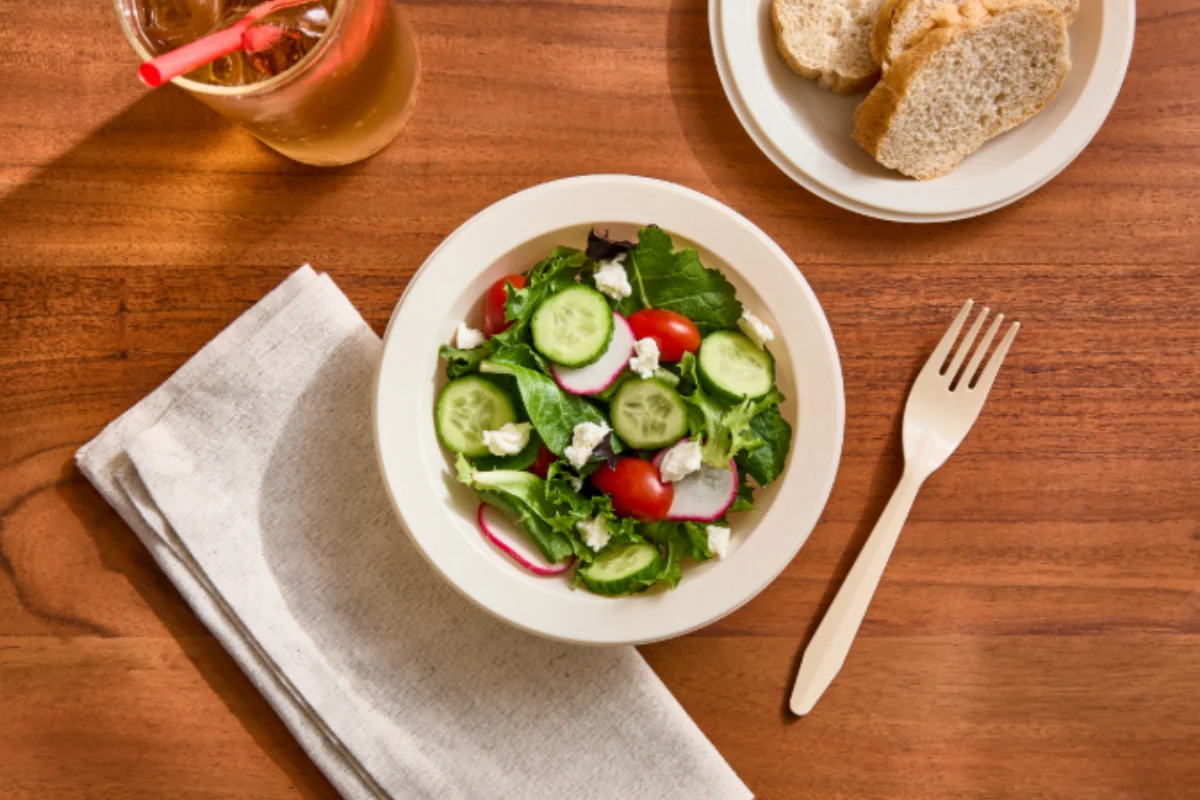
Response: “Our plates, bowls, and trays are built for real food service, warm and cold. They’re designed to hold up under warm food without going soft or leaking through, which is what you need when food is sitting under a lamp. That said, every heat-lamp setup runs at a different temperature, so we’d want to walk through your specific setup together before you order. That way we’re putting the right product in the right environment.”
Offer Samples? Yes. Suggest a heat-lamp test at their station during service.
Objection 10: “Can they handle greasy or saucy foods?”
What They’re Really Asking: Will the plate collapse or soak through mid-service?
Response: “Absolutely. They’re built to handle greasy and saucy food without soaking through. And because there are no plastic linings or chemical coatings, you don’t have any PFAS or BPA concerns either.”
Offer Samples? Yes. Suggest a full-service test with an actual menu item.
Material Performance at a Glance
A lot of the objections above come back to one question, and that’s what works for which drink or food.
The answer depends on your buyer’s specific menu, and getting it wrong is the most common reason compostable products underperform in the field.
The table below covers the full range of material. Use it to match the right product to the right application before a sample ships.
Cost Objections (Related to Performance)
Price pushback is rarely just about price.
When a buyer questions the cost of compostable packaging, they’re usually asking whether the switch will create problems they didn’t budget for.
The three objections below are the ones your team will hear most often, and each one has a factual answer that goes beyond “it’s worth it.”
“They’re More Expensive. Are They Worth It?”
Compostable straws typically cost 1–3 cents more per unit than conventional plastic straws. At 500 drinks a day, that’s $5–$15 more per day, or roughly $1,800–$5,500 a year.
Put it next to a $50,000/day fine for non-compliance under California’s SB 54, and the math shifts fast. SB 54 requires all single-use foodservice packaging to be recyclable or compostable by 2032.
Seven states already have EPR programs placing producer fees on non-compostable packaging, with timelines running through 2032. And more than 20 states now ban PFAS in plant-fiber food packaging.
If your operation touches any of those markets, switching now will be cheaper in the long run.
Volume helps too. The more you order, the closer the per-unit price gets to conventional. We can work with you on a tiered structure that makes the switch more comfortable from day one.
Response Script: “I hear you. But let’s see it like this. How many drinks do you sell per day? At 500 drinks a day, you’re looking at maybe $5 to $15 more than plastic, which adds up to around $1,800 to $5,500 a year. Suddenly, not that bad, right? Now, think about what would happen if you got a penalty for not complying? How much will that cost you? Worst, how will that affect your reputation? Are you willing to take that sort of risk just to save ew thousand? And we can always look at volume pricing to bring your cost down. Why don’t you start with just one location first? If the numbers make sense for that, we can move forward.”
“Can’t I Just Use Paper? It’s Cheaper.”
Paper is cheaper per unit, but it has a hidden cost that rarely shows up in the initial comparison.
When a customer is sipping a thick drink like a Frappuccino or a blended shake, they typically go through 2 or 3 paper straws before finishing. At that point, your per-transaction cost on paper often exceeds what you’d spend on a single compostable straw. The unit price is misleading.
There’s also a sustainability argument. Paper is not the eco-friendly option most buyers assume it is. Most paper plates and containers have a plastic lining inside, which means they cannot be composted and end up in landfills. Paper is not a like-for-like swap for compostable packaging.
If you’re sourcing from overseas and you operate in any of the 20+ states with active PFAS bans, you’re carrying a compliance risk you may not even know about yet.
Response Script: “Paper looks cheaper per unit, but once you count replacements and the compliance risk on imported paper in your state, it’s closer than it appears. And the customer experience difference is night and day. Let me show you what the per-transaction cost actually looks like at your volume.”
“What if I Switch and Customers Complain?”
This is a fair concern, and it deserves an honest answer. Operators who switch from plastic to compostable straws rarely get complaints, provided the product is spec’d correctly. Operators who switch from plastic to paper frequently do.
The accounts most at risk are those who specify the wrong product for the application, for example, using a straw format in hot-drink service where the product isn’t rated.
A phased rollout with a sample pilot at one or two locations before a full-system switch gives you a real-world test and a backup plan.
Response Script: “That’s a fair concern. And honestly, the only way to find out what happens is to test. Pick 2 locations, run for a couple of weeks, and see if your customers really complain. The best-case scenario is that your customers will barely notice the difference.”

Proof Documentation to Have Ready
Buyers who are serious about switching will ask for documentation before they forward your quote to procurement.
Having it ready signals that you’re an established supplier, and it removes the most common reason deals stall at the evaluation stage.
The Minimum Documentation Set for Any Sales Conversation
Every sales rep should carry these digitally and be able to share them on a call or in a follow-up email within 24 hours: (certifications vary by product)
- BPI Commercially Compostable certification (ASTM D6400): Confirms your straws meet the US standard for commercial compostability. Buyers can verify it themselves in seconds at bpiworld.org.
- TÜV AUSTRIA OK Compost HOME: Confirms that the straws break down in a home compost environment. A strong differentiator for buyers in markets with limited commercial composting access.
- Eastman Chemical PFAS declaration letter: An additional manufacturer-level confirmation of no PFAS presence in the resin used to make the straws.
- USDA BioPreferred Certified Biobased: Confirms the product contains certified biobased content, sourced from renewable materials.
Note that certifications vary by product type. Straws are certified TÜV, BPI, and USDA Biobased. Tableware and cutlery are certified only at the material level.
When and How to Share Documentation
Share the BPI listing ID early, ideally in your first conversation. Your buyer can look it up in under a minute and confirm the certification themselves. That’s more convincing than anything you say about it.
Send the full test reports with the samples before the close. If your buyer is waiting on certification documents to move a quote forward internally, you’re already out of the loop. For enterprise accounts, send under NDA. But send them early.
When to Offer Samples
Samples close performance objections faster than any script. But sending samples to every prospect wastes product and time.
Here’s how to decide.
Always Send Samples To:
- Any buyer raising a performance objection (soggy, warm/cold, texture, fit).
- Large accounts and first-time buyers in your category.
- Institutional buyers (hospitals, universities, stadiums) who will run their own internal evaluations before approving a new SKU.
Send Selectively To:
- Price-focused buyers who haven’t asked a performance question. Samples won’t change a decision driven purely by cost. A cost comparison worksheet will do more.
- Small-volume accounts where the sample cost is disproportionate to the order potential.
Don’t Send To:
- Unqualified prospects who haven’t engaged with pricing or volume.
- Buyers who’ve said they’re collecting samples from multiple vendors with no stated evaluation process.
What to Include with Every Sample Shipment
A sample with no context is just a product. A sample with a testing protocol converts. Include:
- The physical product (enough to run actual tests, at least a dozen per format).
- A one-page spec sheet with the BPI ID, FDA letter reference, and PFAS COC.
- A short “how to test” card. Have them freeze it, microwarm a plate, leave a straw in an iced drink for 2 hours, and try inserting it through a standard lid.
- A cost comparison vs their current product at their volume.
- A direct contact for follow-up questions.
Follow-Up Timing:
- On day 3, check that the samples arrived and nudge them to actually run the tests.
- On day 10, follow up with something specific like “How did the smoothie test go?”
- On day 21, you’re ready to talk business. Bring a case study from a similar operator and move the conversation forward.
Advanced Objection Scenarios
The 4 objections below tend to surface later in the sales process, usually once a buyer is genuinely considering a switch.
They require more nuance than a standard performance rebuttal because they mix legitimate concern with incomplete information.
Acknowledge the underlying worry directly before getting into the details.
“We Tried Compostables Years Ago, and They Were Terrible.”
Acknowledge it directly. Early-generation compostable products had real failure modes. Straws were frequently spec’d out of the application. Plates and trays warped under heavy food. Those problems came from mismatched products.
Wave Ware is built differently. BioCal uses Ocean Calcium Sand as the core material, which delivers the strength and rigidity buyers expect from plastic.
Cellulose acetate straws carry TÜV AUSTRIA OK Compost HOME certification, meaning they’re verified to break down even outside of industrial composting.
Response: “That’s completely fair. I’d probably worry about the same thing if I were you. I’d like to know about it. What were you using, and what went wrong? The reason I am asking is that most of the horror stories we hear trace back to the wrong product being used. The materials available now are genuinely different.”
“Our Customers Are Used to Plastic and Will Complain.”
The real-world evidence from operators who’ve made the switch is worth citing here.
- Levi’s Stadium (San Francisco 49ers) runs 63% waste diversion using compostable packaging throughout the venue, per 49ers VP Jim Mercurio.
- University of Georgia’s Foley Field reached 91.6% waste diversion in a pilot using certified compostable products, with close to 60% of diverted material composted at the Athens-Clarke County facility.
- Princeton Campus Dining saw over 50% reduction in landfill-bound waste at Frist Campus Center after switching to certified compostables.
The honest caveat here is that operators whose customers do notice and comment are almost always running the transition without any customer communication.
A simple table tent that says “We switched to compostable straws” at rollout converts a potential complaint into brand recognition.
Response: “Honestly, most customers don’t even notice. Where operators do get pushback, it’s almost always because they didn’t say anything to their customers about the switch. A simple table card at rollout explaining what changed turns it into a story you’re telling, and most customers respond well to that. We can help you put that together too if it’s useful.”
“What if Regulations Change and We Don’t Need These Anymore?”
Your buyer is probably thinking about Executive Order 14208, which Trump signed in February 2025 to stop federal agencies from buying paper straws. That’s it. It only applies to federal government purchasing, and it didn’t touch a single state law.
Every state-level straw ban and packaging mandate is still in place. A June 2025 study published in Science looked at plastic bans across multiple states and found zero rollbacks within 5 years of a ban passing. More states are adding restrictions each year.
If your buyer is already in a regulated state, they need a compliant product now. If they’re not yet, the direction of travel is pretty clear.
Response: “EO 14208 was about paper straws in federal government buildings. It didn’t change a single state law, and every state ban in your operating markets is still in place. A June 2025 study in Science found no evidence of rollback within five years of a ban passing. The question for your business isn’t whether regulations might change. It’s whether you’re already in a regulated state, because if you are, you need a compliant product right now.”
“Can You Guarantee Performance?”
Be upfront with your buyer about what a guarantee actually means. No manufacturer can promise their product will perform outside the conditions it was designed and tested for.
What you can stand behind is performance within the certified range, and you have the documented test results to prove it.
Response: “We can certify this in writing. Our straws are BPI certified, TÜV AUSTRIA certified for home and industrial composting, PFAS-free, and field-tested at a real commercial composting facility. We stand behind all of that with a replacement guarantee for any manufacturing defect. What we can’t promise is performance outside the product’s rated use, and honestly, no supplier who’s being straight with you can either.”
“We’re Already Looking at Another Compostable Brand.”
When a buyer is comparing you to another compostable supplier, the conversation shifts from “will this work?” to “why yours?” The answer comes down to two things: the depth of certification and where the product is made.
A lot of imported compostable products carry claims without third-party verification behind them. Ask whether the competing product has a BPI listing ID you can look up, a signed PFAS Certificate of Compliance, and a real-world field disintegration result from a recognized facility.
Many don’t. Wave Ware carries BPI certification, TÜV AUSTRIA OK Compost HOME, and USDA Biobased certification.
On supply reliability, every Wave Ware product is made in Gadsden, Alabama. Several imported compostable brands have had supply disruptions that left buyers without inventory mid-season.
With a US manufacturer, you get shorter lead times, no tariff exposure, and consistent availability every month.
Response: “Good, you should be. A few things worth checking with any supplier you’re talking to: Can they pull up a BPI listing you can verify right now? Do they have a signed PFAS declaration? Have their products actually been tested at a real composting facility? We can show you all 3. And everything we make is manufactured in Alabama, so you’re not dealing with overseas lead times or tariff exposure.”
A Note on Composting Access
One thing to address honestly in any sales conversation is that compostable packaging requires access to a commercial composting facility to deliver its environmental benefit.
Roughly 18.1% of the US population currently has access to programs that accept certified compostable products.
If your buyer is in a market without composting infrastructure, the performance and compliance arguments still hold. The composting end-of-life benefit requires a verified commercial composting facility in your area to be actionable.
You can check local composter availability through the US Composting Council’s directory.
Your Buyers Have the Questions. Now You Have the Answers.
Every objection in this guide comes down to the same thing: your buyer wants to know the switch won’t blow up in their face. That’s fair. And now you can show them, with real certifications, real operator results, and a sample they can test themselves.
Wave Ware straws and tableware at NantBioRenewables are made from Ocean Calcium Sand, manufactured in the USA, and carry BPI and TÜV AUSTRIA certifications across the product range (certifications vary by product).
When your buyer is ready to see it for themselves, the best next step is simple: request a sample with the form below. Let the product answer the question.