


The biopolymer types behind foodservice packaging affect everything from shelf life to which customers you can actually serve.
Each material stores differently, handles heat differently, and breaks down in different places, so the one you stock shapes what you can promise an account.
This guide breaks down the four materials you will run into most often, including PLA, PHA, sugarcane (bagasse), and paper. You will see what each one is made of, where it performs, how to store it, and how to recommend it with confidence.
Why Material Type Matters for Distributors
Material type matters because it shapes how you stock, store, and sell every product you carry, and it decides which customers you can serve well.
A few things play out that way for you in practice.
- Storage: Every compostable material behaves differently on your shelf. What works for one product can damage another if you store them the same way.
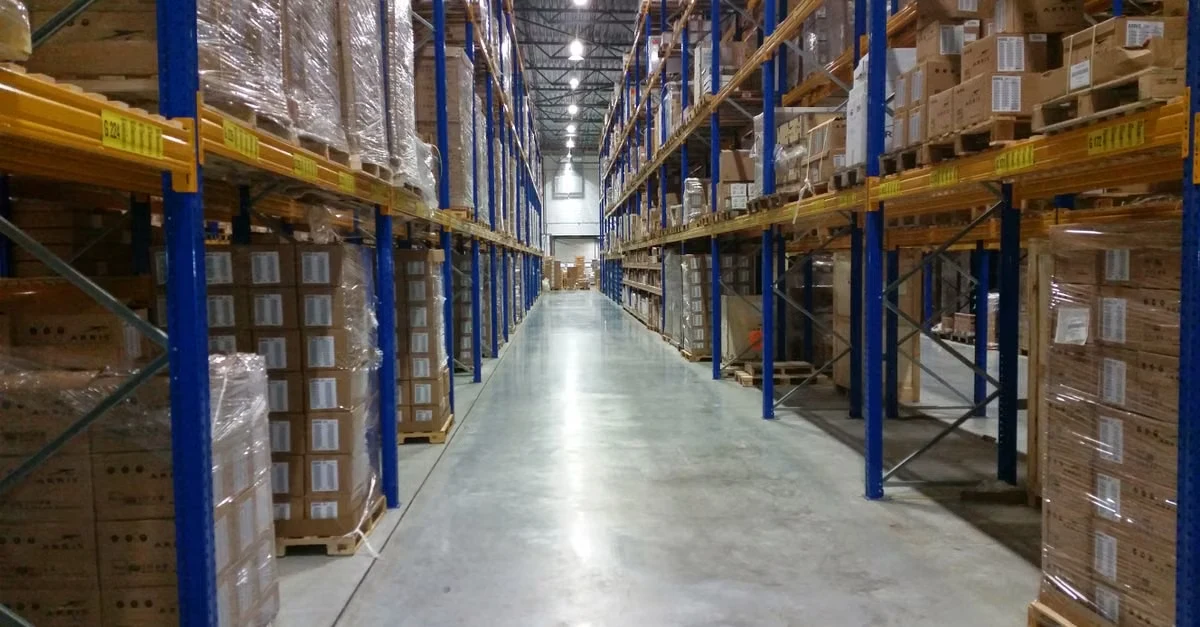
- Shelf life: Compostable products generally have a 12-month shelf life. How long a product sits and how far it travels to reach you both eat into the time you have to sell it.
- Compliance: Schools, hospitals, and government accounts require certified compostable or PFAS-free packaging. The documentation behind a product can decide whether you win the account.
The Four Materials at a Glance
Below is a quick side-by-side of the four materials before we go deeper into each one.
Overall, compostable packaging usually runs about 10 to 40% more upfront than conventional plastic.
PLA (Polylactic Acid)
PLA is a bioplastic made by fermenting plant sugar, usually from corn or sugarcane, into lactic acid and turning that into a polymer. The world’s PLA comes from a small group of producers.
In look and feel, PLA is the closest bioplastic to conventional plastic. It is clear, rigid, and the cheapest of the compostable plastics, which makes it the easiest switch for customers who want a familiar product.
Heat is its main limit. Standard PLA starts to soften at a fairly low temperature, around 95°F, so it belongs in cold applications. A heat-treated version called CPLA holds up better and often shows up in hot cutlery, but plain PLA and hot liquid do not mix.
Best for: Cold straws, clear cold-food packaging, and cold cutlery, with CPLA covering hot cutlery.
PHA (Polyhydroxyalkanoates)
PHA is a bioplastic with a twist. Instead of being built in a chemical reactor, it is produced inside microorganisms that are fed plant oils or sugars, then harvested through fermentation.
Its standout trait is where it breaks down. PHA can compost in an industrial facility, a home compost pile, soil, and even marine settings, which sets it apart from every other material here.
PHA also handles heat better than PLA and stays tough and flexible rather than brittle. The catch is price. PHA typically costs several times more than PLA, often three to five times, and supply is still scaling up, so it trades at a premium.
Best for: Straws, flexible films, and PFAS-free coatings on fiber products, especially for customers who want a home-compostable or marine-safe claim.
Sugarcane and Bagasse
Bagasse is the fibrous material left over after sugarcane is crushed for its juice. Rather than being thrown away, that fiber is pulped and pressed under heat and pressure into sturdy foodservice items.
For heat, bagasse is the standout fiber. It handles warm food well, with many products rated to around 200°F, and it is microwarmable for short reheating. Bagasse is not built for oven or stovetop temperatures, and no compostable fiber is.
Naturally water-resistant, bagasse still needs a coating to handle greasy food. One thing to watch is PFAS.
Fiber products like bagasse have historically been a common home for these “forever chemicals,” which were used to add grease resistance, so PFAS-free documentation matters here.
Best for: Plates, bowls, trays, and warm or hot takeout containers.
Paper-Based Products
Paper is the most familiar material on this list, but for foodservice, it comes with a big asterisk. Plain paper cannot hold liquid or grease on its own, so paper products almost always carry a thin barrier lining.
Three linings show up most often.
- PE (plastic) lining: Waterproof and cheap, but not compostable and hard to recycle, because the plastic is fused to the paper.
- PLA lining: Plant-based, industrially compostable, and free of PFAS.
- Water-based coating: A newer option that is PFAS-free and can be both recycled and composted.
The message to pass along to customers is simple. Paper is not automatically the eco-friendly choice.
Many paper plates and containers have a plastic film inside, which means they often cannot be composted or easily recycled, even though they look green.
Best for: Wraps, bags, boxes, and lined containers.
How to Store Compostable Packaging by Material
The four materials above are not the only ones you will come across.
NantBioRenewables also manufactures with Ocean Calcium Sand, an aragonite mineral sourced from the Bahamas ocean, and cellulose diacetate, a plant-derived material used in select clear products.
Both follow the same storage logic as the materials covered here, so the rules below apply across the board.
Getting compostable packaging storage conditions right keeps your inventory performing the way it should.
And the rules are simple.
- Store products below 95°F, out of direct sunlight, and away from heat sources like ovens or radiators.
- Keep humidity low and leave items in their original packaging until use.
- Favor indoor storage, especially in regions with big seasonal swings.
- Rotate stock on a first-in, first-out basis.
One point confuses many customers. So it is worth clearing up. Compostable products will not break down in your warehouse.
They only compost under specific industrial conditions, so heat and humidity can affect how a product performs on the shelf without ever kicking off the composting process.
That distinction matters for how you talk about shelf life. After about a year, a straw’s quality and performance can change, so treat that as a performance limit rather than the product composting on its own.
Shelf life also connects straight to sourcing. If a straw has a 12-month shelf life and spends 12 weeks traveling from an overseas factory to your warehouse, it has already used up roughly 23 percent of its life before you touch a single case.
Protect that shelf life by sourcing closer to home. Because NantBioRenewables manufactures in the United States and produces daily, you can restock in 2 to 4 weeks, or 4 to 6 weeks, with custom artwork, instead of the 2 to 3 months that overseas suppliers often take.
That keeps you from over-ordering against a 12-month clock, and NantBioRenewables can even hold safety stock for you under a supply agreement.
To see how the products perform in your conditions, request a sample at [email protected].
Matching Materials to Your Customers’ Needs
The fastest way to match material to customer is to start with the food, then layer in disposal and compliance.
NantBioRenewables makes straws, plates, trays, bowls, and cutlery across several materials, so you can match each account without juggling separate suppliers.
- BioCal: NantBioRenewables’ proprietary formulation, made by combining Ocean Calcium Sand (aragonite) with polymers for commercially compostable products.
- Cellulose diacetate: A plant-derived material used for select clear products, and home compostable.
- PLA: The familiar plant-based compostable plastic.
- Polypropylene: A conventional option when customers need packaging for hot food, microwavable items, at a lower price point.
Your common accounts tend to line up like this.
- Quick-service and fast-casual: Compostable straws for cold and warm drinks, trays and bowls for cold and warm menu items, and cutlery that holds up to a hot meal.
- Schools, hospitals, and universities: Lead with certification and PFAS-free documentation, since these accounts answer to procurement rules and compliance teams.
- Events and catering: A home-compostable material like cellulose diacetate gives the customer a stronger story for guests and can justify a premium.
- Institutional dining and high-volume accounts: Microwarmable plates and bowls handle cold and warm service, and polypropylene is worth a look when durability or budget drives the decision.
Can Your Customers Actually Compost It?
A quick reality check separates an honest recommendation from a greenwashed one. Compostable packaging mostly breaks down in an industrial facility, and access to those facilities is limited.
The United States has roughly 200 full-scale food-waste composting facilities, and about 142 of them, close to 71%, accept food-contact packaging, according to a BioCycle nationwide survey.
Access is also concentrated, with a handful of states holding most of the facilities and several states having none at all.
For you, that changes the recommendation. A “compostable” label only delivers if the customer can reach a facility that accepts the product.
So a customer in a well-served metro is a great fit for standard compostables, while a customer in a composting desert may get more real-world value from polypropylene.
A Simple Way to Recommend the Right Material
You can match almost any customer to the right material with a short series of questions.
Work through them in order.
- Hot or cold? For cold and warm items, reach for BioCal, cellulose diacetate, or PLA across your straws, cutlery, and clear products. These microwarmable plates, bowls, and trays can also handle warm food. Nothing compostable survives stovetop or oven heat.
- Wet or greasy? BioCal, cellulose diacetate, and PLA hold liquid without a barrier coating. PFAS has historically shown up in those coatings, so ask your supplier for documentation on any coated product.
- Compliance account? Straws carry TÜV Austria, BPI, and USDA Biobased certification. Tableware and cutlery are certified at the material level. Match the paperwork to what your account actually requires.
- Budget? Polypropylene and paper straws sit at the lower end. But a customer sipping a thick drink like a Frappuccino often burns through 2 or 3 paper straws, so the real cost per transaction is higher than a single compostable straw.

Frequently Asked Questions (FAQs)
Below are a few common questions distributors get about compostable materials.
What Are Compostable Straws Made Of?
Our compostable straws are made of BioCal (a mix of aragonite, PLA, and other polymers), cellulose diacetate, PLA, or PP (polypropylene).
Is PLA Compostable at Home?
Standard PLA needs the sustained heat of an industrial composting facility and will not break down in a backyard pile.
However, check the certification on the specific product rather than the material name. If the material or the finished product carries a home compostability certification, such as TÜV Austria’s OK Compost HOME, it can be home compostable.
Does “Compostable” Mean PFAS-Free?
Not on its own. PFAS, the “forever chemicals” once used for grease resistance, have shown up in fiber products in particular.
Certifications help here, since the Biodegradable Products Institute (BPI) now screens certified products for added fluorinated chemicals. Always ask for PFAS-free documentation.
Does Biobased Mean the Same Thing as Compostable?
No, and mixing them up is a common error. A label like USDA Certified Biobased tells you how much of a product comes from renewable plant material.
A product can be biobased without being compostable, so check for a separate compostability certification.
Is Paper the Most Eco-Friendly Choice?
No. Many paper plates, containers, and straws carry a thin plastic film inside, which often keeps them from being composted or recycled, even when they look like the green option.
Choosing the Right Material with Confidence
The best compostable program matches each product to the food it holds, the way your customer disposes of it, and the rules that the customer answers to.
If you want a manufacturing partner that supplies across compostable and conventional materials, all made in the United States and backed by PFAS-free documentation, NantBioRenewables can help you build the right mix.
NantBioRenewables’ products carry TÜV Austria, BPI, and USDA Biobased certification (certifications vary by product), so you get exactly the proof your accounts ask for. Request a sample at [email protected] to put the products to the test.