



Sourcing compostable packaging for locations across multiple states sounds easy, but it isn’t, unfortunately!
If you run a restaurant chain, hotel group, or stadium concession program, you need the same product at every location, on the same schedule, every month. One supplier falling short in a single region creates a problem across your whole network.
This guide shows you exactly what to check, what to ask, and what documentation to request before you sign anything.
Why Multi-State Capability Is Harder Than It Looks
Most suppliers say they ship nationwide. But “we ship everywhere” and “we can reliably serve all your locations” are two very different things. One is a claim. The other requires proof.
True multi-state capability means three things working at once:
- Fulfillment reach: Can they actually deliver to all your locations on consistent timelines?
- Product consistency: Is the product the same quality and spec at every site?
- Regulatory compliance: Does the product meet the specific rules of every state you operate in?
That third point is where compostable packaging gets complicated. The regulatory situation across U.S. states is genuinely fragmented.
California, Colorado, Oregon, Washington, Maine, Minnesota, and Maryland all have active extended producer responsibility (EPR) laws that affect packaging.
PFAS bans in food packaging are now active in 12 states, each with different effective dates and thresholds.
California’s AB 1201 adds another layer, requiring that products labeled “compostable” meet ASTM D6400 or D6868 standards and contain less than 100 ppm total organic fluorine.
In short, a product that checks every box in one state may fall short in another. Your supplier needs to understand that and not leave it entirely to you to figure out.
How to Verify Geographic Coverage (Before You Sign Anything)
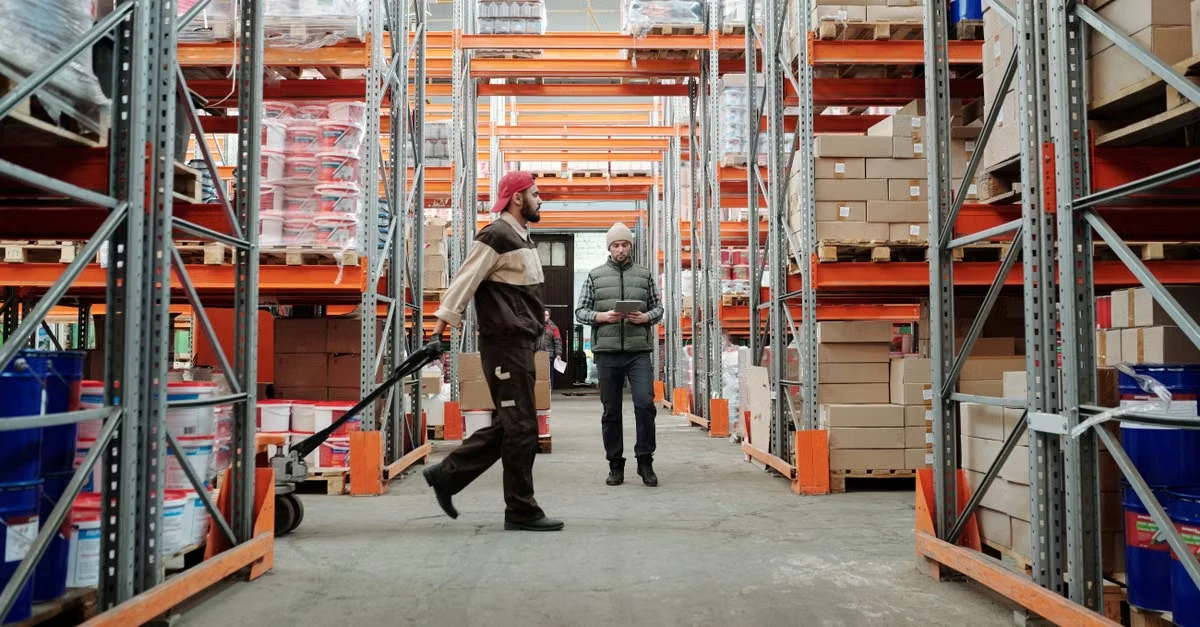
When a supplier tells you they serve all 50 states, ask for specifics. You want documentation you can verify. Verbal assurances won’t hold up when a location runs short.
Here’s what to request:
- Service area maps showing exactly where they can deliver from their facilities
- Carrier contracts or partnerships that confirm their delivery zone coverage
- Warehouse or fulfillment center locations (distribution points)
- On-time delivery rate data, broken down by region if possible
The benchmark to hold them to is a delivery performance rate above 95% on-time. It is considered standard for critical supply relationships in procurement. If a supplier can’t show you that number, or won’t, that tells you something.
Red flags to watch for:
- Vague “nationwide” claims with no DC locations disclosed
- Relying entirely on one plant with no regional fulfillment partners
- Presenting raw material certifications as if they’re finished-product certifications (a common gap with compostability claims)
- No references from customers running comparable volume in comparable geographies
Always run a pilot order before committing to a full contract. Verify with at least 2 or 3 current customers of a similar size. And where feasible, visit the facility.
Evaluating the Distribution Network
A supplier’s distribution network tells you more about their real reach than any sales conversation will.
When you’re evaluating a supplier’s logistics setup, look at four things:
- Warehouse locations: Are their facilities near your markets, or are they shipping cross-country to most of your locations? Distance drives transit time, and transit time eats into shelf life.
- Carrier relationships: Which carriers are they actually using? Major LTL carriers like Old Dominion, XPO, and FedEx Freight all publish transit-time tools by ZIP code. You can verify a supplier’s claims yourself in two minutes.
- 3PL partnerships: Do they use third-party logistics partners to extend their reach? Ask which 3PLs, where their warehouses are, and what service guarantees are in place.
- Domestic vs. overseas sourcing: A U.S.-based manufacturer avoids delays that overseas suppliers deal with on every order.
Overseas orders from China take 56 to 84 days door-to-door. That covers ocean transit only.
Add customs clearance, port dwell time, and inland freight, and you’re looking at the full 8 to 15 weeks overseas suppliers typically quote. A domestic supplier ships in days.
For example, NantBioRenewables produces compostable packaging out of Gadsden, Alabama. Our standard stock items ship in 2 to 4 weeks. With custom artwork, 4 to 6 weeks max.
And because NantBioRenewables manufactures daily 24/7 every day of the month throughout the year. You don’t need to bulk order against a 12-month shelf life. You order regularly, stay fresh, and avoid the expiry risk that comes with overseas bulk models.
Every product of ours is PFAS-free. They carry BPI, TÜV Austria, and USDA Biobased certifications, though these vary by specific product. If you want to see the product quality, request a sample at [email protected]. We’ll get it to you directly.
Lead Times by Region: What to Realistically Expect
For compostable packaging, lead time math matters more than it does for conventional materials.
Compostable straws, plates, and cutlery have a 12-month shelf life. Every day your order spends in transit is a day of shelf life your locations never get to use.
Domestic LTL Shipping
If your supplier manufactures in the U.S., your order moves by truck. Here’s what that looks like in practice:
Each relay or terminal transfer adds about one business day. A cross-country LTL shipment usually goes through 2 to 3 relays before it reaches you.
Overseas Ocean Freight
If your supplier manufactures overseas, the timeline looks very different.
Those are ocean transit times only. Once you add customs clearance, port dwell time, and inland freight to your warehouse, a realistic overseas order takes 8 to 15 weeks from the day you place it to the day it arrives.
Now apply that to a 12-month shelf life. A compostable tray or bowl that spends 12 weeks on a ship and in customs has already burned through roughly 23% of its usable life before you’ve opened a single case.
If storage conditions at the destination aren’t ideal, that number goes up.
Volume Capacity: Can They Actually Handle All Your Locations at Once?
Scaling with a supplier for one region is one thing. Expecting them to fulfill orders for locations in 10 or 15 states simultaneously is a different ask entirely.
Before committing to a supplier for a national program, verify:
- Their daily and monthly production output, and their verified theoretical annual capacity, as well
- Warehouse square footage and how much of it is allocated to your SKUs
- Their track record with comparable accounts, meaning other national customers running similar volumes across multiple states
- Whether they can run continuous production rather than batch large orders
This last point matters specifically for compostable packaging. An overseas supplier typically operates on a bulk-order model, which forces you to stock heavily to avoid gaps.
A domestic U.S. manufacturer that can produce every day means you don’t need to stock huge volumes. You order regularly, reduce waste from expiry, and keep your shelf-life buffer healthy.
One important question to ask any potential supplier is, “Can you fulfill all our locations simultaneously, or do you fulfill regions sequentially?”
If they’ve never run a genuinely national program, find out what their largest comparable account looks like.
Does Your Supplier Actually Understand State-by-State Compliance?
This is a question most procurement teams don’t ask directly, but it’s one of the most valuable things to find out early.
State-level compliance for compostable packaging varies a lot across the U.S. A product that’s fully compliant in one state may fall short in another.
If your supplier doesn’t understand those differences, you’ll be figuring it out yourself, after the fact.
PFAS Bans
As of 2026, twelve states have active PFAS bans in food packaging. That includes California, Colorado, New York, Washington, Oregon, Vermont, Connecticut, Maine, Hawaii, Maryland, Minnesota, and Rhode Island.
Each state has its own effective date and fluorine threshold. California’s limit is below 100 ppm total organic fluorine. The FDA has already pulled major PFAS grease-proofing agents off the market nationwide.
Ask your supplier for PFAS test reports by product. If they can’t produce them, that’s a gap you’ll own.
NantBioRenewables has a detailed guide on how PFAS-free certification works in foodservice packaging sales conversations. It’s worth having on hand when you’re evaluating suppliers.
Certification Requirements
Not all compostability certifications carry the same weight everywhere.
- BPI: Recognized across every U.S. state with regulatory compostability language. It’s the baseline cert to ask for.
- TÜV Austria: Covers both home compostability (OK compost HOME) and industrial compostability (OK compost INDUSTRIAL). This matters in states where products need to break down outside of industrial facilities.
Another important certification is USDA Biobased. This one doesn’t prove compostability, but it confirms the product’s biobased content is verified by the USDA BioPreferred program.
Federal agencies are required to prioritize certified biobased products when purchasing, so if you supply schools, hospitals, or any government-funded foodservice operation, this matters.
California AB 1201
California has stricter rules than most states. Products labeled “compostable” must meet ASTM D6400 or D6868 standards and contain less than 100 ppm total organic fluorine.
They also need to qualify as an allowable input under the USDA National Organic Program. That last requirement is currently delayed until June 30, 2027, but many products already fail it.
If you have locations in California, make sure your supplier knows this and can confirm which of their products actually qualify.
EPR Program Registration
Extended producer responsibility (EPR) laws are now live in several states. California’s SB 54 requires 100% of single-use packaging to be recyclable or compostable by 2032.
Colorado and Oregon are already running their programs. Producers selling into those states need to be registered.
A supplier that tracks this for you and can confirm which products are compliant in which states is worth more than one that hands you a single cert sheet and leaves the rest to you.

Why You Need a Backup Supplier Strategy
Even a reliable primary supplier has limits. A facility issue, a weather event, or a demand spike can leave locations short if you’re relying on a single source.
It’s always handy to keep a backup supplier on hand.
What a Backup Arrangement Actually Looks Like
You have two practical options:
- Secondary supplier: A separate vendor who can step in for a specific region or product category. You just need enough to cover your highest-risk locations.
- Safety stock with your primary: Some suppliers, including NantBioRenewables, can sign a supply agreement and hold a few truckloads on your behalf. You get an emergency buffer without carrying the inventory cost yourself.
The second option is worth asking about during contract negotiations. It reduces your dependency without adding a second supplier relationship to manage.
Why Shelf Life Changes the Math for Compostable Packaging
For conventional packaging, the safety stock math is simple. Stock more, stay covered.
For compostable packaging, overstocking creates a different problem. If you bulk up inventory to compensate for a long lead time, you risk products hitting their 1-year shelf life before they’re used.
After that point, straw performance declines. It’s a supply problem that turns into a product quality problem at the point of service.
The cleaner answer is a domestic supplier who can manufacture every day and replenish on a regular cycle. You carry less, stay fresher, and don’t need a large safety stock to begin with.
Contract Flexibility for Multi-State Programs
When you’re signing a supply agreement for multiple locations, three contract terms are worth paying close attention to.
- Delivery terms: Ask whether your supplier quotes DDP (they cover delivery all the way to your door) or FOB (you take over freight costs from their loading dock). For a national account with locations spread across different regions, DDP makes your costs easier to compare and manage.
- Regional pricing: Shipping from one facility to California costs more than shipping to a neighboring state. Ask if your supplier offers a blended rate across your network, so you’re not getting hit with different prices for different locations.
- Order flexibility: Watch out for large minimum order quantities (MOQ). If you’re locked into buying a full container every order cycle, but your demand shifts at the end of the year, you’re either overstocked or scrambling. Make sure your contract allows you to adjust the order size and frequency.

Communication and Support When You’re Operating Across Time Zones
If your locations span from the Pacific to the East Coast, supplier responsiveness becomes a daily operational factor.
A few things to confirm before signing:
- Do you have a dedicated account rep, or are you in a shared support queue?
- What are the documented response-time SLAs for order changes, issues, or urgent requests?
- What hours are their team available? A domestic U.S. supplier has a natural advantage here over an overseas manufacturer, where business hours may overlap by only a few hours with yours.
This is especially relevant when a location is running low on inventory or a compliance question comes up that needs a fast answer.
Choose a Supplier You Can Actually Grow With
Multi-state compostable packaging programs fail for one reason more than any other. The supplier worked fine at first, then couldn’t keep up as the program grew. You now have a clear framework for making sure that doesn’t happen to you.
Verify the distribution network. Check compliance documentation by state. Ask about monthly replenishment. Get the contract terms right. And always know your backup plan.
The suppliers worth working with at a national scale are the ones who can answer every question in this article without hesitation.
NantBioRenewables manufactures compostable packaging in Gadsden, Alabama, under the Wave Ware brand. Products are made from aragonite (ocean calcium sand), BioCal (a mix of aragonite, PLA, and other polymers), cellulose diacetate, and PLA. Every product is PFAS-free.
NantBioRenewables is a 2025 Sustainability Awards finalist and part of the Nant conglomerate, a group of science-driven companies founded by Dr. Patrick Soon-Shiong.
If you want to see the full product range before you commit to anything, you can browse the Wave Ware compostable foodservice packaging lineup or request a sample by filling out the form below.