


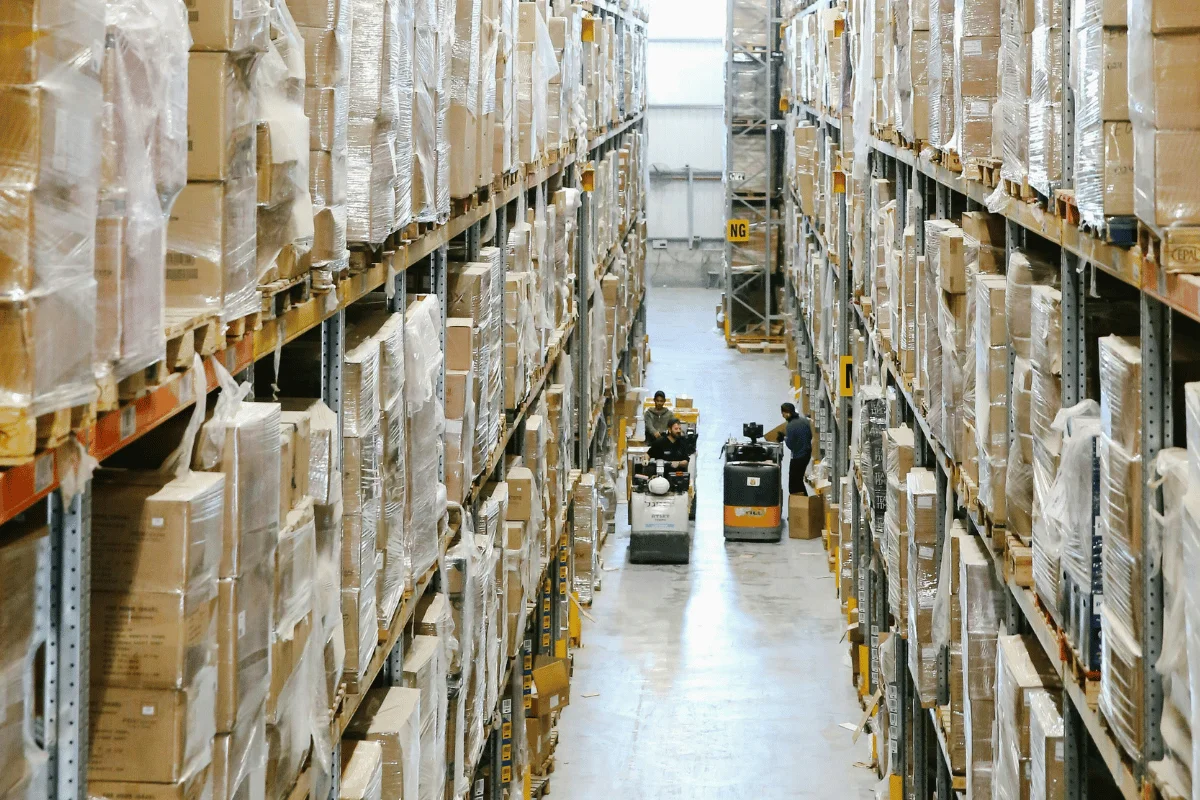
If you store compostable foodservice packaging, there are a few simple factors worth keeping in mind.
Unlike conventional plastics like PP and PE, compostable materials respond to temperature and humidity, so knowing the right conditions goes a long way.
This guide gives you everything you need in one place. You will find storage ranges by product type, warning signs to watch for, and adjustments by US climate zone.
Why Compostable Packaging Is Sensitive to Storage Conditions
Compostable materials are designed to break down when exposed to heat, moisture, and microbial activity.
That is exactly what makes them valuable at the end of their life, but it also means your storage conditions can work against you if you are not careful.
Two processes are responsible for most storage damage:
- Thermomechanical softening (Heat damage): Compostable packaging softens, deforms, and loses its shape when exposed to too much heat, especially under stacking pressure. A trailer sitting in the Phoenix sun in July can hit 130°F inside. This is more than enough to warp or fuse stacked packaging before you ever open the box.
- Hydrolysis (Moisture damage): Compostable packaging absorbs moisture from the air and slowly breaks down from the inside out. The higher the humidity, the faster this happens. Keeping your storage area dry is just as important as keeping it cool.
The EPA recommends keeping indoor RH below 60% (ideally 30-50%) to prevent mold growth. Once RH climbs above 70% and stays there for more than a few days, mold germination is nearly inevitable.
Conventional plastics do not have either of these problems. That is why most distribution centers were never designed with compostable packaging in mind, and why operators running both product lines need separate storage protocols.
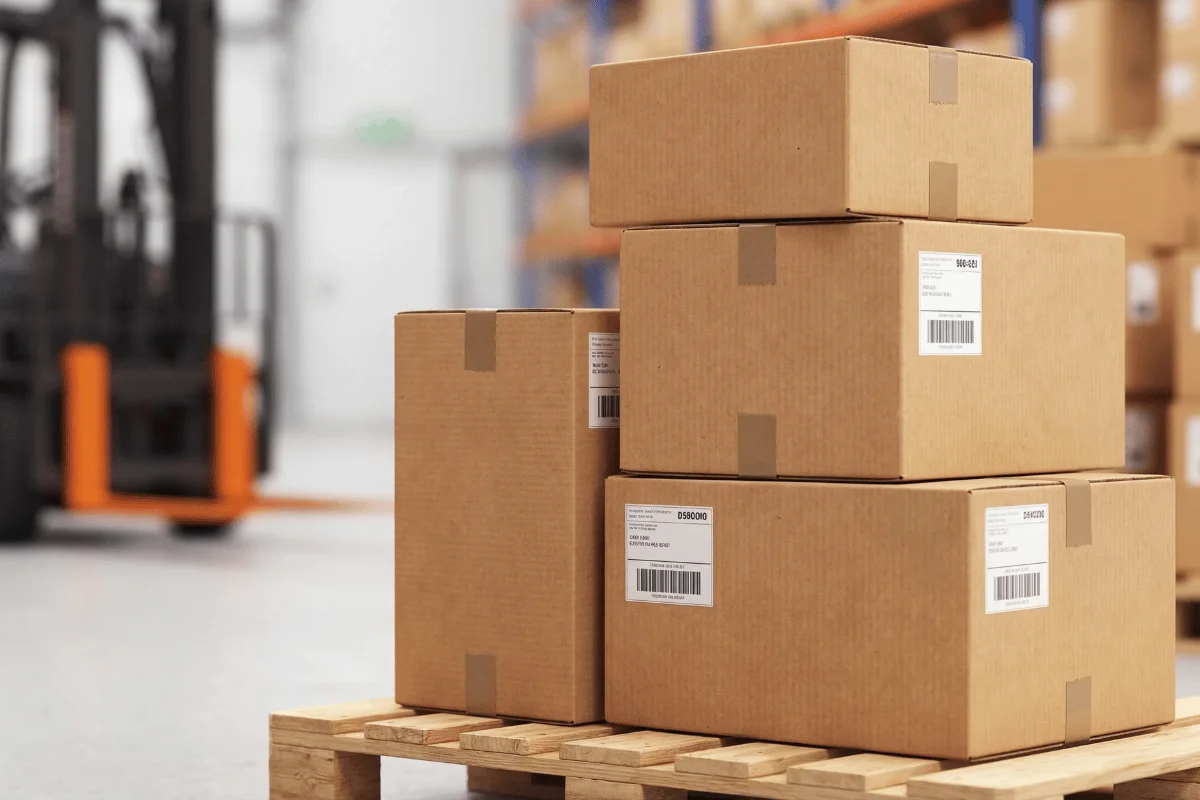
Master Storage Conditions Table
Use this as your go-to reference. Post it in your warehouse and share it with the receiving staff.
Sourcing compostable packaging for your operation? NantBioRenewables works directly with hospitality and foodservice brands to build custom compostable solutions, certified for both home and commercial composting.
Unlike offshore suppliers, you get hands-on service and full quality control from a US-based team. Request a sample here.
Storage Challenges by US Climate Zone
Compostable materials are more sensitive to climate than conventional plastics, which means your location plays a bigger role in how you store them.
Here is how each major US region affects your inventory:
- Southwest (AZ, NV, NM, inland CA): Heat is the main thing to watch here. Without HVAC, your warehouse interior can hit 120°F in summer, which is well above the recommended storage limit for compostable packaging. Keep products away from exterior walls and schedule deliveries early in the morning during the summer months.
- Southeast (FL, GA, LA, AL, the Carolinas): You are dealing with high heat and high humidity at the same time, with summer conditions regularly hitting 85–95°F at 70–90% RH. Both are outside the safe range for compostable packaging, and hurricane-season power outages can make things harder to manage.
- Midwest (IL, MN, OH, MO, WI): The seasonal swing is what you need to plan for. Winter heating drops indoor RH significantly, which can make compostable packaging brittle. Then summer pushes temps and humidity well above safe storage levels.
- Northeast (NY, MA, NJ, CT, PA): Cold, dry winters are your main concern. When you bring product in from a cold trailer into a heated warehouse, condensation builds up inside the packaging. Coastal locations also deal with persistent salt-air humidity that wears down outer cartons faster than you might expect.
- Pacific Northwest (WA, OR, coastal ID): Temperatures here stay between 50–80°F for most of the year, which works in your favor. The persistent 60–80% RH is what you need to watch, as it can accelerate moisture-related damage to compostable packaging over time.
There is one fix that helps every region. That is to control what happens at your loading dock. Every time a dock door opens, outside air rushes in, and your temperature and humidity spike.
Installing door seals, air curtains, or insulated dock covers keeps that outside air out and protects the bulk of your inventory.
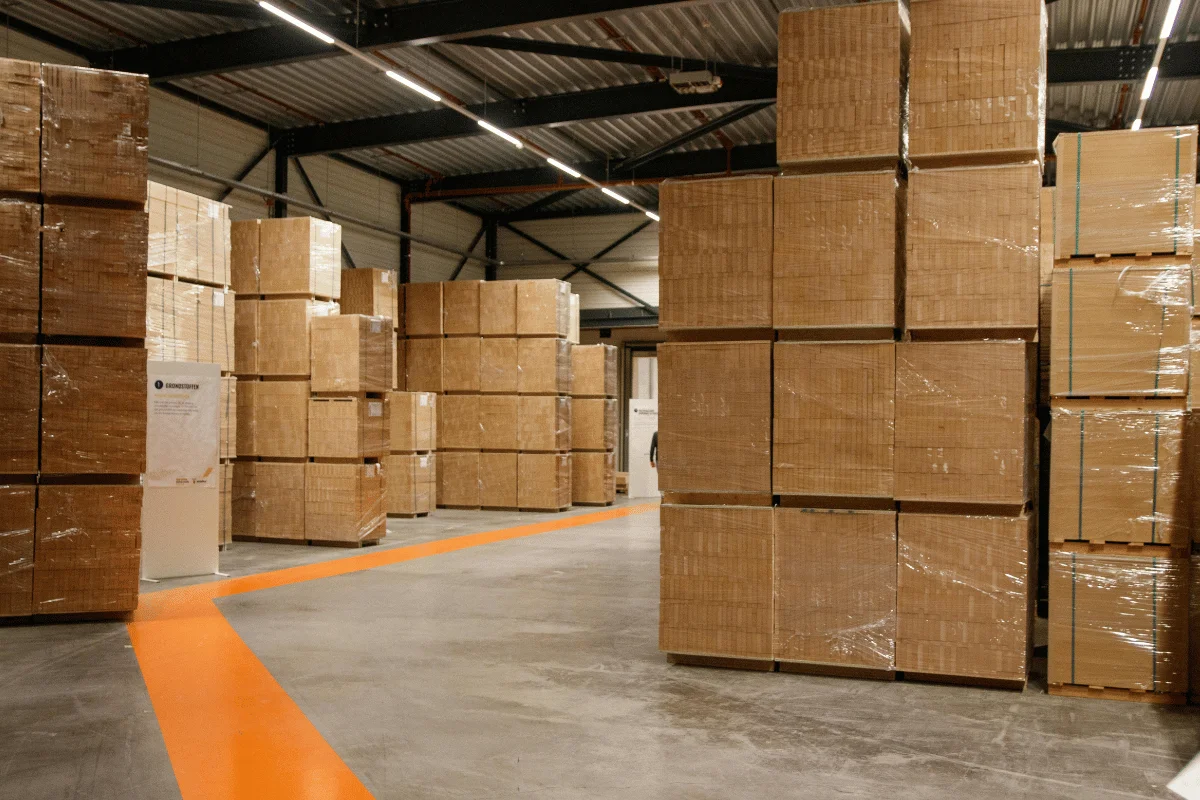
Warning Signs Your Compostable Packaging Has Been Compromised
Do a quick visual and physical check when receiving new shipments and during weekly QA walks. You are looking for anything that feels, looks, or smells off.
Here is what to watch for by product type:
BioCal (Ocean Calcium Sand) products (straws, plates, bowls, trays):
- Products that feel soft or lose their shape under light pressure
- Products that feel brittle or snap more easily than expected
- Surface discoloration or unusual spotting
- A white, chalky, or powdery film on the surface that was not there when first received
- Plates, bowls, or trays that no longer sit flat or have visibly warped
Cellulose acetate products:
- A sharp smell similar to vinegar (this means the material is breaking down and cannot be reversed)
- Products that crack or crumble when you flex them
- Straws that look noticeably shorter or narrower than the rest of the batch
- An oily or waxy residue on the surface that was not present when first received
If you notice a vinegar smell, pull that pallet away from the rest of your stock immediately. The acetic acid vapors released will actively accelerate breakdown in adjacent inventory.
Move the affected pallet and ventilate the area before continuing your inspection.
Temperature Monitoring: What You Actually Need
You do not need enterprise-grade equipment to keep your compostable packaging safe. What you need depends on how much inventory you are holding and how much your environmental conditions change day to day.
Here are your three options:
- Basic – Manual hygrothermometer ($15–$50): A min/max digital unit hung in two or three zones. Works for small operators, but requires daily logbook entries to be meaningful.
- Standard – USB data logger ($50–$150): Units such as the Lascar EL-USB-2, Onset HOBO MX2301, or Elitech RC-5+ continuously log temperature and humidity and generate downloadable PDF reports. These are the sweet spots for most regional foodservice distributors and satisfy documentation requirements for FSMA and GFSI audits. Accuracy is typically ±0.3°C and ±2% RH.
- Advanced – Wireless IoT sensors (subscription-based): Cloud-connected sensors with real-time SMS or email alerts when thresholds are crossed. Systems like GlacierGrid are used in larger DCs. Worth the investment if you are running multiple product lines, managing multiple locations, or holding high-value inventory.
Where to place sensors:
- Place one within 10 feet of each loading dock door.
- Cover the top, middle, and floor levels of tall racks, since heat can vary up to 18°F from floor to ceiling.
- Put sensors on west and south-facing walls where heat builds the most.
- Cover any mezzanine or area close to the roof.
Thresholds you should set alerts for:
- Set a caution alert at 80°F or 60% RH if it holds for more than two hours.
- Set a warning alert at 85°F or 65% RH at any point.
- Set a critical alert at 90°F or 70% RH and start your quarantine review immediately.
How Often to Check
Automated loggers should run continuously at 5–15 minute intervals. If you are doing manual checks, twice daily (start of each shift), with a formal logbook entry is the minimum.
Do a weekly QA review of the logs, and calibrate portable units annually.
For regulatory recordkeeping, 12 months of archived logger data is the industry minimum. 3 years is better if you want coverage for any product-liability situations.

What to Do When Something Goes Wrong
If the temperature exceeds 90°F or stays above 85°F for more than two hours:
- Move affected inventory to your coolest available storage zone within one hour.
- Inspect a 10-unit sample from each pallet for deformation, sticking, or discoloration.
- Quarantine any pallet that shows damage. Tag it, physically separate it, and flag the item in your inventory system.
- Notify your supplier within 24 hours, with photos and a temperature log export.
If humidity spikes above 65% RH for more than 12 hours, or above 70% at any point:
- Run a portable industrial dehumidifier in the affected zone (50–300 pint/day units).
- Prioritize isolation of your compostable straws and tableware first.
- Open one carton per pallet and check for moisture spots on the innermost items.
- Investigate root cause: dock seals, roof leaks, slab vapor barriers, or HVAC failure.
If you find visible mold or a vinegar smell:
- Pull that pallet out immediately. Mold can spread to nearby pallets within 24–48 hours.
- Photograph everything before you move anything.
- Call your supplier to work out what to do with the affected stock.
- Clean the storage area before you put anything back in it.
For insurance documentation, before moving anything, photograph the damage with timestamps.
Export your data logger history for at least 7 days before and after the event, and put together a written inventory with SKU, lot number, quantity, and replacement value for each affected item.
Save a physical sample of the damaged product for the adjuster. Most policies require you to file within 30–60 days, so do not sit on it.
Seasonal Storage Checklist
Storage conditions shift throughout the year. So, what you need to watch changes with every season.
Here is a quick breakdown of what to expect and what to do.
Let cold shipments sit 24 hours before opening. Watch for static buildup in cardboard outers. |
||
Service HVAC filters. Replace dock seals. Calibrate sensors annually. |
||
Schedule deliveries before 8 AM. Avoid mid-day cross-docking. Run 24-hour IoT alerts. Accelerate FIFO on compostable stock. |
||
Confirm sensor coverage for the new SKU volume. Watch for condensation as cold snaps arrive. Brief the receiving staff before peak season. |
Frequently Asked Questions (FAQs)
Here are answers to the most common storage questions we hear from warehouse and operations teams.
Is 95°F Too Hot for Compostable Packaging Storage?
It is the upper caution limit. Your products will not fail immediately, but sustained heat with stacking pressure can deform the packaging of compostable products. Move inventory to a cooler zone and treat it as a signal to act.
What Humidity Level Is Dangerous?
Above 60% RH, moisture risk starts for compostable packaging. Above 70% RH for a few days, damage becomes nearly certain. Keep your warehouse below 50–55% RH to stay safe.
Can Compostable Packaging Be Stored Near a Loading Dock?
No. Dock doors bring in outside air every time they open, causing humidity and temperature spikes. Keep your compostable inventory at least 10–20 feet away.
Do I Need Dehumidifiers?
If you are in the Southeast or Pacific Northwest, yes. In the Midwest and Northeast, you will need one seasonally in the summer. In the Southwest, a humidifier in winter may actually serve you better.
What Role Does Air Conditioning Play?
AC is the most effective single control for summer heat, and it also removes humidity, which often removes the need for a separate dehumidifier in moderate climates.
Set your warehouse thermostat to 68–72°F and verify with floor-level sensors that the reading matches.
How Often Should I Check Temperature?
A data logger running continuously is the standard. If you do manual checks, twice per shift with a written log entry is the minimum.
How Long Do Compostable Products Last in Storage?
Compostable packaging has a shelf life of one year. To get the full 12 months, store products in a cool, dry place below 95°F (35°C), away from direct sunlight and heat sources like ovens or radiators.
Keep everything sealed in its original packaging until use. Indoor storage is always the safest option, especially in regions with big seasonal temperature swings.
Proper Storage Starts with the Right Product
Good storage habits protect your investment. But it also matters what you are storing in the first place.
NantBioRenewables manufactures compostable foodservice packaging in the US, including straws, tableware, cutlery, and thermoformed solutions made with Ocean Calcium Sand, the world’s first carbon-negative raw material for compostable packaging.
Every product is BPI certified, built for real foodservice performance, and backed by shorter lead times from domestic manufacturing in Alabama.
If you are sourcing compostable packaging that holds up in the field and on the shelf, explore the full product range here.